Author: Vinit Makol

  • US Dollar Dominates Market Sentiment with Unprecedented Strength

    US Dollar Dominates Market Sentiment with Unprecedented Strength

    Insights and Analysis: Navigating the Current Landscape of the US Dollar

    The US Dollar (USD) stands tall, commanding the financial markets with unwavering strength. As investors and traders alike navigate through the ever-shifting currents of global finance, understanding the driving forces behind the USD’s bullish momentum becomes paramount. In this article, we delve deep into the core factors propelling the USD forward, analyze the impact of key economic indicators, and provide strategic insights for traders seeking to capitalize on this dominant trend.

    Core PCE Data: Impact on US Dollar Strength

    At the forefront of market attention is the release of core Personal Consumption Expenditures (PCE) data, hailed as the Federal Reserve’s preferred measure of inflation. The anticipated rise of 0.4% in January, coupled with an annual rate decrease to 2.7%, is poised to influence USD performance significantly. However, market participants must remain vigilant, as surprises in the data could trigger unexpected price swings and alter sentiment towards the greenback.

    Interest Rate Expectations: Driving Forces Behind USD Momentum

    Closely intertwined with USD dynamics are interest rate expectations, serving as a barometer for future Fed policy decisions. With sticky price pressures, robust job creation, and soaring wage growth, speculation mounts on the possibility of a delayed easing cycle. Should the Fed opt for a more hawkish stance, prolonging higher interest rates, the USD could experience sustained upward pressure, bolstering its bullish trajectory.

    Technical Analysis of EUR/USD, GBP/USD, and Gold Prices

    In the realm of technical analysis, a meticulous examination of major currency pairs and gold prices reveals intriguing insights into their performance amid the prevailing dominance of the US Dollar (USD). Let’s dissect the intricacies of EUR/USD, GBP/USD, and gold prices to discern potential trading opportunities amidst USD-centric market dynamics.

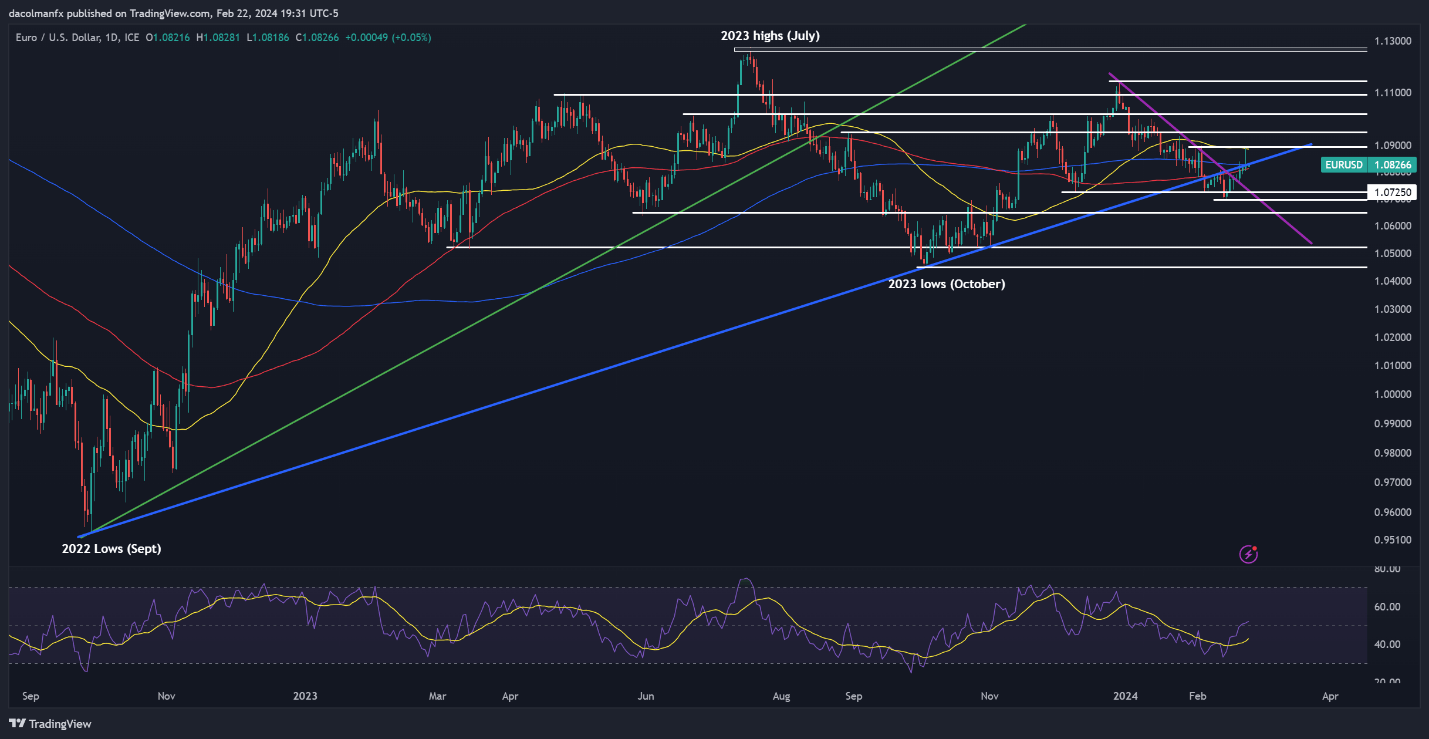
    Starting with EUR/USD, the currency pair exhibits a gradual resurgence after recent fluctuations. However, its ascent is met with formidable resistance at the 200-day simple moving average, a critical juncture that could determine its trajectory in the coming sessions. Should EUR/USD manage to breach this significant barrier, bullish momentum could propel prices towards key rally points, notably at 1.0890 and beyond. Traders eyeing long positions might find opportunities to capitalize on potential breakouts above this pivotal level, anticipating further upside potential fueled by improving sentiment or fundamental developments.

    US Dollar
    EUR/USD TECHNICAL ANALYSIS CHART
    source:dfx

    Analysis of GBP/USD

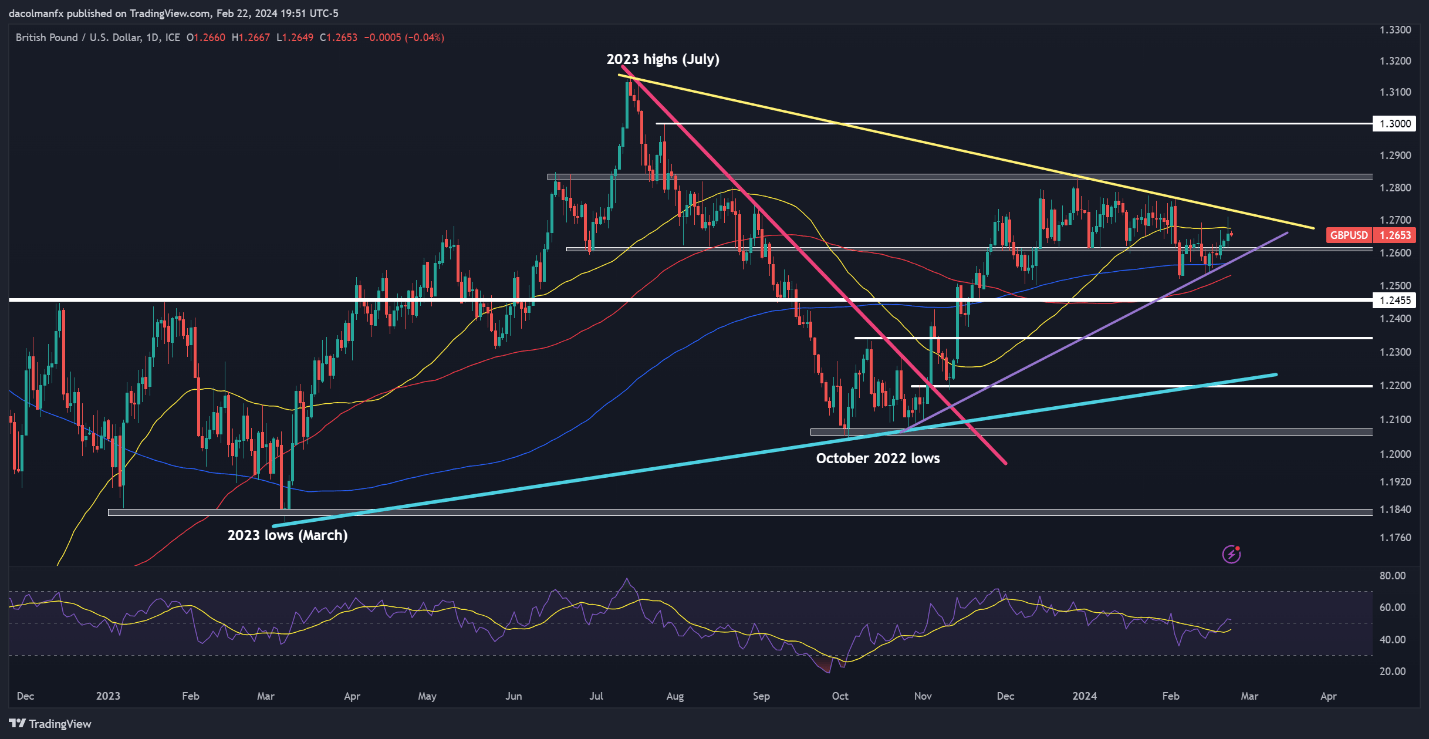
    Conversely, GBP/USD faces its own set of challenges as it navigates through USD-dominated waters. The currency pair grapples with hurdles entrenched around its 50-day moving average, presenting a formidable barrier for bullish advances. Amidst this resistance, GBP/USD finds support levels delineated at 1.2600, reinforced by trendline support. Traders must monitor price action closely around these critical levels, as a breach could signal a shift in market sentiment and potentially pave the way for further upside or downside movements. Moreover, developments in geopolitical events or economic data releases could act as catalysts, influencing GBP/USD’s trajectory in the near term.

    US Dollar
    GBP/USD TECHNICAL CHART
    source:dfx

    Analysis of Gold Prices

    Meanwhile, gold prices find themselves in a precarious position amidst the prevailing strength of the USD. As a traditional safe-haven asset, gold typically exhibits an inverse relationship with the USD; however, recent market dynamics have seen the precious metal struggling to maintain its footing. With USD dominance exerting downward pressure, gold prices face significant challenges in sustaining upward momentum. Pivotal price thresholds emerge as key determinants of future movements, with traders closely monitoring support and resistance levels for potential trading opportunities. A break below crucial support levels could signal further downside for gold, while unexpected developments in macroeconomic factors or geopolitical tensions may offer temporary reprieves or catalysts for price movements.

    US Dollar
    GOLD PRICE (XAU/USD) TECHNICAL CHART
    source:dfx

    In essence, the technical analysis of EUR/USD, GBP/USD, and gold prices provides valuable insights for traders navigating the USD-dominated market landscape. By leveraging technical indicators, identifying critical levels, and staying abreast of market developments, traders can position themselves strategically to capitalize on potential trading opportunities while mitigating risks associated with market volatility and uncertainty. As the USD continues to exert its influence on global markets, adept navigation of technical factors remains paramount for successful trading endeavors in the dynamic world of currency and commodity markets.

    Strategies for Traders in the USD Dominated Market

    For traders navigating the tumultuous waters of the USD-dominated market, strategic foresight is essential. Embracing volatility, leveraging fundamental insights, and utilizing technical analysis tools are integral components of a robust trading strategy. Whether seizing opportunities for short-term gains or adopting a long-term perspective, staying informed and adaptable is key to thriving in the ever-evolving landscape of global finance.

    Conclusion

    As the US Dollar maintains its bullish bias, fueled by core economic data and interest rate expectations, traders must remain vigilant in their pursuit of profits. By dissecting market trends, analyzing key indicators, and devising informed strategies, traders can harness the power of the USD to their advantage. In an era defined by uncertainty and rapid change, adaptability and knowledge are the cornerstones of success in the dynamic world of currency trading.

    In conclusion, as the US Dollar continues to assert its dominance in the financial markets, understanding the intricacies of its strength is paramount for traders seeking to navigate this landscape effectively. By remaining informed, adaptable, and strategic, traders can capitalize on the opportunities presented by the USD’s bullish momentum, ultimately steering their portfolios towards success in the ever-changing world of global finance.

  • Explosive Nvidia Earnings Report Sends Shockwaves Through Market, Urgent Call for Interest Rate Cut Sparks Economic Optimism

    Explosive Nvidia Earnings Report Sends Shockwaves Through Market, Urgent Call for Interest Rate Cut Sparks Economic Optimism

    Nvidia’s Quarterly Performance Leaves Investors on Edge

    In the fast-paced world of technology and finance, few companies command as much attention as Nvidia. Renowned for its groundbreaking innovations in artificial intelligence (AI) and semiconductor technology, Nvidia has become a household name synonymous with cutting-edge advancements. As the company prepares to unveil its latest earnings report, anticipation runs high among investors and industry observers alike. In this article, we delve into the impact of Nvidia’s explosive earnings report on the market, exploring the implications for investor sentiment and the broader economic landscape.

    Nvidia’s Dominance in AI Technology

    At the forefront of the AI revolution, Nvidia has played a pivotal role in shaping the future of technology. Through its development of high-performance semiconductor chips, Nvidia has enabled breakthroughs in AI-driven applications across industries ranging from healthcare to automotive. With its powerful GPUs (Graphics Processing Units) and specialized hardware, Nvidia has emerged as the go-to choice for companies seeking to leverage the transformative potential of AI.

    Nvidia’s dominance in the AI space is underscored by its unrivaled expertise in designing chips optimized for AI workloads. These semiconductor chips, capable of handling complex computations and neural network training, form the backbone of Nvidia’s AI ecosystem. As demand for AI-powered solutions continues to soar, Nvidia’s position as a market leader remains unassailable, driving significant revenue growth and market capitalization.

    The Impact of Nvidia’s Earnings Report

    Against this backdrop of technological prowess, Nvidia’s quarterly earnings report takes on added significance. Investors eagerly await the release of these financial results, viewing them as a barometer of the company’s health and future prospects. The recent earnings report from Nvidia, characterized by robust revenue figures and earnings per share, has sent shockwaves through the market, surpassing even the loftiest expectations.

    The reaction to Nvidia’s earnings report has been swift and pronounced, with the company’s stock price experiencing significant fluctuations in the aftermath of the announcement. Investors, keenly attuned to any hint of weakness or strength in Nvidia’s performance, have closely scrutinized the earnings report for signs of future growth potential. Despite the volatility in the market, Nvidia’s position as a market leader in AI technology remains unshakeable, buoyed by strong fundamentals and a track record of innovation.

    Market Volatility and Economic Factors

    However, the market reaction to Nvidia’s earnings report cannot be viewed in isolation. Broader economic factors, including concerns about inflation and geopolitical tensions, have contributed to heightened volatility in the financial markets. As investors grapple with uncertainty surrounding the trajectory of the global economy, Nvidia’s performance serves as a litmus test for investor confidence and market sentiment.

    The implications of Nvidia’s earnings report extend far beyond the realm of technology, reverberating throughout the broader market landscape. Analysts and investors alike pore over the details of the earnings report, searching for clues about the company’s future growth prospects and its ability to navigate macroeconomic headwinds. Against a backdrop of heightened market volatility, Nvidia’s resilience and adaptability stand as a testament to its enduring strength as a market leader.

    Nvidia’s Role as a Market Barometer

    Indeed, Nvidia’s status as a market barometer cannot be overstated. As one of the most influential companies in the tech sector, Nvidia’s performance often foreshadows broader trends in the market. Whether it’s the adoption of AI technologies or shifts in consumer preferences, Nvidia’s earnings report offers valuable insights into the underlying dynamics shaping the future of technology and finance.

    As investors digest the implications of Nvidia’s earnings report, one thing remains clear – the company’s influence extends far beyond its core business operations. By pushing the boundaries of innovation and driving technological advancements, Nvidia continues to shape the future of AI and computing. As the market absorbs the latest developments, Nvidia’s trajectory remains a key focal point for investors seeking to navigate an increasingly complex and uncertain landscape.

    Monetary Policy Expert Urges Swift Action Amid Economic Uncertainty

    In the midst of economic uncertainty, a prominent monetary policy expert has sounded the alarm, urging swift action in the form of an interest rate cut. This call to action comes at a crucial juncture, with the global economy facing challenges ranging from inflationary pressures to sluggish growth. In this article, we delve into the implications of this urgent plea for an interest rate cut and its potential impact on economic outlooks.

    Background on the Call for an Interest Rate Cut

    Recent statements from policymakers, including members of the Monetary Policy Committee (MPC), have underscored the need for proactive measures to support economic recovery. With interest rates at historically high levels, concerns have been raised about the impact on consumer spending, investment, and overall economic activity. The call for an interest rate cut reflects a growing consensus among experts that decisive action is needed to mitigate risks and foster sustainable growth.

    Impact of Interest Rate Cut on the Economy

    An interest rate cut has the potential to stimulate economic activity by reducing borrowing costs for businesses and consumers alike. Lower interest rates can encourage investment in capital projects, spur demand for housing and other durable goods, and provide relief to households burdened by debt. Additionally, a well-timed interest rate cut can help address inflationary pressures while supporting employment and income growth.

    Monetary Policy Committee (MPC) Perspective

    The MPC plays a crucial role in determining monetary policy decisions, including changes to interest rates. While some members advocate for immediate action, others may adopt a more cautious approach, weighing the risks and benefits of policy interventions. Dissenting opinions within the MPC highlight the complexity of decision-making in uncertain economic environments and the need for careful deliberation.

    Market Expectations and Investor Sentiment

    Financial markets closely monitor developments in monetary policy, reacting to signals from central banks and policymakers. Expectations of an interest rate cut can influence asset prices, with investors adjusting their portfolios in anticipation of changes in borrowing costs and market conditions. However, uncertainty surrounding the timing and magnitude of policy actions can also lead to volatility and fluctuations in market sentiment.

    Economic Outlook and Long-Term Implications

    The decision to implement an interest rate cut carries both short-term and long-term implications for the economy. While immediate benefits may include increased spending and investment, policymakers must also consider the potential risks of prolonged low interest rates, such as asset bubbles, financial instability, and inflationary pressures. Balancing these considerations requires a nuanced understanding of economic dynamics and a commitment to supporting sustainable growth over the long term.

    Conclusion

    In conclusion, Nvidia’s explosive earnings report has sent shockwaves through the market, leaving investors on edge as they assess the implications for their portfolios. As a pioneer in AI technology and semiconductor innovation, Nvidia occupies a unique position of influence in the tech sector and beyond. Despite the challenges posed by market volatility and economic uncertainty, Nvidia’s resilience and adaptability have positioned it for continued success in the years to come. As investors brace for the next chapter in Nvidia’s remarkable journey, one thing is certain – the company’s impact on the market will be felt for years to come. Meanwhile, as policymakers weigh the merits of an interest rate cut, the stakes are high for stakeholders across the economy. While the call for decisive action offers hope for economic recovery, it also underscores the challenges and uncertainties ahead. By prioritizing stability, growth, and inclusive prosperity, policymakers can navigate the complexities of monetary policy and chart a course toward a more resilient and prosperous future.

  • What Is the Forex Anti-Aging Impact and Why It Matters for Traders

    What Is the Forex Anti-Aging Impact and Why It Matters for Traders

    The Forex Anti-Aging Impact is an emerging economic phenomenon reshaping how traders understand currency trends and global markets. This term refers to the direct and indirect effects that anti-aging research, biotech innovation, and demographic shifts have on the forex market. As the world experiences rapid advancements in healthcare and increased human longevity, forex traders must reconsider traditional strategies. This intersection of longevity science and forex trading is not a passing trend—it’s a game-changer.

    Biotech firms around the globe are pouring billions into anti-aging innovations. Their progress influences investor behavior, economic forecasts, and even central bank policy. The Forex Anti-Aging Impact is more than a buzzword; it’s a strategic lens for viewing market shifts. Understanding this relationship helps traders stay ahead of the curve and adapt to a rapidly evolving landscape.

    The Growing Influence of Biotech Advancements and Forex Markets

    Biotech advancements and forex markets now share an unexpectedly close relationship. In the past, biotech developments largely stayed within the healthcare or pharmaceutical sectors. Today, however, they have spilled over into the financial domain, especially in currency trading.

    Each time a major biotech firm announces a breakthrough in anti-aging research, it sparks economic reactions. Investors flock to countries leading in innovation. These capital flows increase demand for national currencies, affecting forex prices.

    Take the United States and Switzerland as examples. Both countries host globally recognized biotech hubs. A breakthrough anti-aging treatment in Boston or Basel can shift investor sentiment overnight. This creates upward momentum for the US dollar or Swiss franc, respectively.

    Furthermore, currency pairs involving innovation-driven economies—such as USD/JPY or CHF/EUR—show noticeable volatility after biotech headlines. These fluctuations are not random. They’re direct results of biotech advancements and forex markets reacting in tandem.

    Traders who follow anti-aging developments gain a competitive edge. They understand how scientific news can trigger forex movements before most analysts do.

    Aging Demographics and Currency Values: A Strategic Insight

    Aging demographics and currency values form another critical link in the Forex Anti-Aging Impact. The global population is aging rapidly, particularly in developed nations. This demographic shift creates ripple effects throughout economies and, subsequently, in currency markets.

    As people live longer, government spending patterns change. Healthcare becomes a bigger portion of national budgets. Older populations also tend to save more and spend less, which slows consumption-driven growth. These trends can impact GDP and interest rates—two major forex indicators.

    For instance, Japan’s aging population has long affected the yen. With a median age over 48, Japan spends a significant portion of its GDP on elderly care. This persistent trend keeps inflation and growth subdued, often leading to a weaker yen in the long term.

    Now consider how countries with younger demographics—like India—are gaining favor among forex investors. Youth-driven consumption and workforce expansion attract foreign capital. This boosts the rupee’s appeal in currency markets.

    Therefore, understanding aging demographics and currency values is essential. Traders who consider age-based economic trends can better predict long-term forex behavior. They can align their strategies with the macroeconomic realities that aging populations create.

    Anti-Aging Market Forex Dynamics: Where Innovation Meets Strategy

    The rise of the anti-aging industry has sparked unique Anti-Aging Market Forex Dynamics. As biotech companies invest heavily in longevity treatments, they influence currency trends more than ever before.

    Consider a scenario where a biotech giant in Germany secures EU approval for a cutting-edge anti-aging therapy. The euro could rise as investors anticipate increased exports, economic growth, and healthcare leadership.

    Alternatively, imagine a policy shift in China that boosts national funding for anti-aging research. Such news could drive bullish sentiment for the yuan. Currency traders would see this as a sign of increased global competitiveness and economic modernization.

    These Anti-Aging Market Forex Dynamics show how interconnected science and currency movements have become. The market no longer reacts only to central bank decisions. Now, scientific progress and healthcare investment also steer forex trends.

    Smart traders track both biotech press releases and monetary policy announcements. This dual approach enables them to catch currency shifts at their inception. The result? Better trade entries, reduced risk, and higher profit potential.

    Forex R&D Funding: Fueling Innovation and Market Sentiment

    Forex R&D Funding acts as a crucial engine behind both biotech advancements and forex markets. Government and private sector investments in longevity research don’t just create new treatments—they shape currency behavior.

    For example, when the UK government announced increased funding for anti-aging biotechnology in 2024, the British pound saw a slight but noticeable uptick. Why? Because forex markets viewed the funding as a sign of future economic competitiveness.

    On the flip side, funding cuts or delays can have negative consequences. When the EU paused certain healthcare innovation grants, the euro dipped against both the dollar and the yen. Investors feared a slowdown in scientific progress, and their risk aversion affected currency sentiment.

    This is where Forex R&D Funding plays a dual role. It accelerates biotech development while signaling economic vitality to traders. Forex markets are not blind to where the money goes. In fact, capital allocation speaks louder than words in the global economy.

    Forex traders should monitor funding news just as closely as interest rate decisions. Knowing which countries invest in anti-aging R&D can guide them to strong, resilient currencies.

    Why Biotech Advancements and Forex Markets Are Now Intertwined

    We cannot stress enough how deeply biotech advancements and forex markets are intertwined. The two sectors influence each other on multiple levels. Every scientific leap can trigger forex waves, and every funding round shapes investor confidence.

    Take CRISPR technology as an example. When companies achieved major milestones in gene editing for aging diseases, currency markets reacted. Traders viewed the progress as economic optimism and shifted capital accordingly.

    Media coverage further accelerates this relationship. Headlines about increased human lifespan or reversing aging don’t just attract clicks—they move markets. Investors reevaluate risk, reallocate funds, and currency values respond in real time.

    Forex traders who grasp this connection are better equipped to anticipate volatility. They don’t see biotech news as separate from market trends. Instead, they treat it as part of the same puzzle.

    By including biotech advancements and forex markets in their analysis, traders future-proof their strategies. They stay informed and agile in a market that increasingly values cross-sector intelligence.

    Long-Term Trends in Aging Demographics and Currency Values

    Let’s zoom out and examine the long-term trends connecting aging demographics and currency values. These trends aren’t speculative. They’re based on measurable population data and consistent economic outcomes.

    Countries like Italy, South Korea, and Germany are aging faster than others. Their currencies tend to reflect this reality. Limited workforce growth, rising pension obligations, and healthcare burdens often weigh on economic performance.

    This doesn’t mean these currencies are doomed. However, it means they require a more nuanced trading approach. Forex traders should weigh demographic pressures alongside traditional indicators like interest rates and inflation.

    Meanwhile, nations with growing, youthful populations—like Indonesia, Nigeria, and Mexico—offer a different outlook. These countries may not yet lead in biotech, but their demographic strength supports long-term currency growth.

    When traders combine demographic analysis with biotech developments, they gain a 360-degree market view. They understand where innovation is happening and where the population supports economic expansion.

    This strategic alignment helps traders stay on the right side of currency movements. It also allows them to anticipate shifts before they become headlines.

    Trading the Forex Anti-Aging Impact: Key Takeaways

    For traders looking to integrate the Forex Anti-Aging Impact into their strategy, here are essential takeaways:

    • Follow biotech news: Track clinical trial results, new patents, and government approvals. They often signal forex volatility ahead.
    • Analyze demographic trends: Use data from the UN or World Bank to compare aging curves across countries.
    • Monitor funding flows: Pay attention to Forex R&D Funding announcements from leading economies.
    • Watch sentiment shifts: Media buzz around longevity breakthroughs can drive short-term currency movements.
    • Pair smartly: Match currencies of innovation-led countries (like USD or CHF) against those lagging in R&D or facing demographic decline.

    By combining these elements, traders can refine their market entries and exits. They can position themselves not just as forex analysts but as economic futurists.

    Conclusion: Why the Forex Anti-Aging Impact Matters Now More Than Ever

    The Forex Anti-Aging Impact is not just a theory—it’s a real and growing force in currency markets. As biotech advancements and forex markets become more connected, traders must evolve. Aging demographics and currency values no longer sit in separate boxes. They influence each other in profound ways.

    Understanding Anti-Aging Market Forex Dynamics and tracking Forex R&D Funding equips traders for this new frontier. Those who adapt will benefit from early signals, strong trends, and long-term market clarity.

    This is the era where science and finance meet. And for forex traders, the message is clear: the future belongs to those who can see beyond the chart—and into the lab.

    Click here to read our latest article What Are Liquidity Zones in Forex and How Do Banks Use Them?

  • EUR/USD Soars: Traders Embrace Bullish Momentum Amid Economic Uncertainty

    EUR/USD Soars: Traders Embrace Bullish Momentum Amid Economic Uncertainty

    EUR/USD Gains Traction: Insights into Market Dynamics Amidst Economic Turbulence

    In the ever-fluctuating landscape of the forex market, one currency pair has recently captured the attention of traders worldwide: EUR/USD. Amidst the backdrop of economic uncertainty, the EUR/USD pair has experienced a surge in bullish momentum, defying expectations and confounding market analysts.

    EUR/USD Analysis and Market Trends

    As traders monitor the European session, all eyes are on the EUR/USD pair, which has been inching higher in recent trading sessions. Despite the prevailing downtrend that has characterized much of the year, EUR/USD has shown resilience, displaying signs of strength amidst economic turbulence.

    EUR/USD
    source:dfx

    The ongoing dynamics of EUR/USD are influenced by a myriad of factors, including economic data releases and geopolitical developments. Traders are keenly attuned to the implications of events such as the German Purchasing Managers Index (PMI), which holds significant sway over market sentiment and EUR/USD movements.

    Impact of German PMI on EUR/USD

    One of the key events driving market sentiment this week is the release of Germany’s PMI data. Traders are closely monitoring the February Purchasing Managers Index snapshot, eagerly anticipating insights into the health of the German economy. Expectations are mixed, with forecasts suggesting a slight improvement in the manufacturing sector, albeit at a slower pace than in the previous month.

    The outcome of the German PMI data has the potential to sway EUR/USD movements, with a stronger-than-expected reading likely to bolster the Euro against the US Dollar. Conversely, any signs of weakness in the German economy could exert downward pressure on EUR/USD, reinforcing concerns about Euro weakness amidst broader economic uncertainties.

    Federal Reserve Minutes and Interest Rate Expectations

    In addition to domestic economic data, traders are also awaiting the release of minutes from the Federal Reserve’s recent monetary policy meeting. The minutes offer insights into the Fed’s deliberations and provide clues about future interest rate decisions. Given the robust economic data out of the US in recent months, expectations for rate cuts have been pushed out to June. However, nuances in the Fed’s discussion could still influence market sentiment and EUR/USD movements.

    Interest rate expectations play a crucial role in shaping the outlook for EUR/USD. As investors assess the trajectory of monetary policy in the US and Europe, they weigh the potential impact on currency valuations. Any divergence in interest rate paths between the Federal Reserve and the European Central Bank could exacerbate Euro weakness and fuel further volatility in EUR/USD.

    Euro Weakness and Long-Term Outlook

    Despite the recent bullish momentum in EUR/USD, concerns about Euro weakness linger in the minds of traders. The Euro has been on a weakening trend against the US Dollar throughout the year, reflecting broader uncertainties surrounding the Eurozone economy. While the Eurozone has shown signs of recovery, lingering challenges such as inflationary pressures and geopolitical tensions continue to weigh on the Euro’s performance.

    In the long term, the outlook for EUR/USD hinges on various factors, including economic data releases, central bank policies, and market sentiment. Traders must remain vigilant and adapt their strategies accordingly to navigate the ever-changing dynamics of the forex market.

    Technical Analysis and Market Sentiment

    Technical indicators and market sentiment data offer valuable insights into the future direction of EUR/USD. Traders analyze trends, support and resistance levels, and momentum indicators to gauge market sentiment and identify potential trading opportunities. Additionally, sentiment data from platforms such as IG provides valuable insights into trader positioning and sentiment, helping traders make informed decisions in the EUR/USD market.

    Conclusion

    In conclusion, the recent surge in bullish momentum in EUR/USD reflects traders’ optimism amidst economic uncertainty. The upcoming release of German PMI data and Federal Reserve minutes will offer further clarity on the trajectory of EUR/USD. Traders must remain vigilant and adapt their strategies to navigate the ever-changing dynamics of the forex market, leveraging insights from economic data releases, central bank policies, and market sentiment to inform their trading decisions.

  • Expert Gold Price Forecast: Surging Trends Signal Bullish Outlook

    Expert Gold Price Forecast: Surging Trends Signal Bullish Outlook

    Insights and Analysis: Unveiling the Latest Gold Price Forecast Trends

    In the realm of financial markets, one of the most closely monitored and speculated commodities is gold. Investors worldwide keep a keen eye on its price movements, seeking insights into economic stability, geopolitical tensions, and inflationary pressures. Today, we delve into the realm of gold price forecasting, exploring the intricate dynamics that drive its valuation. With expert insights from Citi analysts, we uncover the latest trends shaping the future of gold prices amidst global uncertainties.

    Factors Influencing Gold Price Forecast

    Central bank gold purchases, alongside global economic conditions and geopolitical risks, play pivotal roles in determining the trajectory of gold prices. Central banks worldwide engage in gold purchases as a strategic move to diversify their reserves and mitigate risks associated with currency fluctuations. The scale and pace of these purchases significantly impact market sentiment and supply-demand dynamics.

    Moreover, the broader economic landscape, including factors such as inflation rates, interest rate policies, and currency valuations, exerts substantial influence on gold prices. Global recessions or periods of economic instability often drive investors towards safe-haven assets like gold, leading to increased demand and upward pressure on prices.

    Citi Analysts’ Insights

    Citi analysts offer valuable insights into the gold price forecast, leveraging their expertise to navigate through complex market dynamics. Their analyses consider a myriad of factors, including central bank gold purchases, global economic trends, and geopolitical risks. According to Citi’s assessments, the outlook for gold prices appears bullish, fueled by surging trends in key market indicators.

    Central bank gold purchases continue to escalate, reflecting a growing appetite for the precious metal among sovereign entities. This trend underscores the significance of gold as a reserve asset, especially amidst uncertainties surrounding traditional currencies and financial markets.

    Additionally, the looming specter of a global recession remains a pivotal factor in shaping gold price forecasts. Citi analysts emphasize the potential for economic downturns to drive investors towards safe-haven assets, bolstering gold demand and propelling prices upwards.

    Comparison with Previous Forecasts

    A retrospective analysis of previous gold price forecasts offers invaluable insights into the efficacy of predictive models and the reliability of forecasting methodologies. By meticulously scrutinizing past predictions and juxtaposing them against actual market outcomes, analysts can discern patterns, identify trends, and refine their forecasting strategies.

    This retrospective examination serves as a critical tool for assessing the accuracy and robustness of forecasting models. Analysts meticulously dissect past forecasts, evaluating the factors considered, methodologies employed, and assumptions made. By delving into the nuances of past predictions, analysts gain a deeper understanding of the intricacies of gold price dynamics and the myriad factors that influence market movements.

    Moreover, comparing past forecasts against actual market outcomes provides a reality check for analysts, highlighting areas of strength and areas for improvement. It allows analysts to identify patterns of overestimation or underestimation, enabling them to recalibrate their models and fine-tune their forecasting methodologies accordingly.

    Furthermore, this comparative analysis facilitates the identification of emerging trends and shifts in market dynamics. By discerning discrepancies between forecasted and actual prices, analysts can uncover hidden variables, unforeseen events, and market anomalies that may have influenced outcomes. This deeper understanding enables analysts to adapt to changing market conditions and enhance the accuracy of future forecasts.

    Ultimately, the process of comparing previous forecasts against actual market outcomes is a continuous journey of learning and refinement. It empowers analysts to evolve their methodologies, incorporate new data sources, and leverage advanced analytical techniques to enhance forecast accuracy. By embracing this iterative approach to forecasting, analysts can navigate the complexities of the gold market with greater precision and confidence, ultimately providing investors with more reliable and actionable insights.

    Expert Commentary and Opinions

    In the realm of gold price forecasting, the insights provided by industry experts are indispensable for investors seeking to navigate the complexities of the market landscape. These experts bring a wealth of experience and expertise to the table, offering nuanced perspectives and informed analyses that shed light on emerging trends and market dynamics.

    Drawing upon their deep understanding of the gold market, industry experts conduct thorough analyses that encompass a wide array of factors. These factors may include central bank policies, geopolitical tensions, macroeconomic indicators, supply-demand dynamics, and investor sentiment, among others. By meticulously examining these multifaceted variables, experts are able to discern patterns, identify correlations, and anticipate potential market movements with greater accuracy.

    Moreover, industry experts possess a keen awareness of the interplay between different factors and their collective impact on gold prices. They understand that gold is influenced not only by traditional economic indicators but also by geopolitical developments, such as trade tensions, conflicts, and geopolitical uncertainties. By synthesizing diverse viewpoints and integrating insights from various disciplines, experts provide investors with a comprehensive understanding of the underlying forces driving gold price movements.

    One of the key strengths of expert commentary and opinions lies in their ability to offer actionable insights and informed perspectives. Whether it’s a nuanced analysis of central bank policies, a deep dive into geopolitical risks, or a macroeconomic overview, experts provide investors with valuable information that can inform their investment decisions. By leveraging these insights, investors can formulate well-informed strategies that align with their risk tolerance, investment objectives, and market outlook.

    Furthermore, expert commentary serves as a vital source of guidance and reassurance for investors navigating uncertain market conditions. In times of volatility and instability, such as economic downturns or geopolitical crises, expert opinions can provide much-needed clarity and perspective. By offering reasoned analysis and informed commentary, experts help investors make sense of complex market dynamics and stay ahead of emerging trends.

    Implications for Investors

    Navigating the volatile landscape of gold markets necessitates a strategic approach and a profound comprehension of underlying fundamentals. As investors chart their course through the ever-shifting tides of market dynamics, it becomes imperative to recognize the implications of gold price forecasts and integrate them into their investment strategies.

    First and foremost, diversification emerges as a cornerstone principle for investors seeking to weather the fluctuations of the gold market. By spreading their investments across a spectrum of asset classes, including equities, bonds, real estate, and commodities like gold, investors can mitigate risks and enhance the resilience of their portfolios. Diversification serves as a bulwark against the inherent uncertainties and volatilities of individual markets, ensuring that the overall portfolio remains robust and well-positioned to withstand unforeseen challenges.

    Moreover, incorporating gold assets into investment strategies holds significant implications for investors seeking to hedge against inflationary pressures and safeguard their wealth. Gold has long been regarded as a store of value and a hedge against currency depreciation, making it an attractive asset during periods of economic uncertainty and inflationary pressures. By allocating a portion of their portfolios to gold assets, investors can effectively hedge against the erosive effects of inflation and preserve the purchasing power of their wealth over time.

    Furthermore, gold assets offer a unique proposition for investors seeking to capitalize on emerging opportunities and navigate market uncertainties. In times of economic turmoil or geopolitical unrest, gold tends to exhibit a negative correlation with other asset classes, such as equities and bonds, thereby providing a safe haven for investors seeking refuge from market turbulence. By strategically allocating resources to gold assets, investors can enhance the diversification of their portfolios and reduce overall portfolio volatility, while simultaneously positioning themselves to capitalize on potential upside opportunities in the gold market.

    Conclusion

    As we navigate through the intricate landscape of gold price forecasting, it becomes evident that multiple factors converge to shape market outcomes. Central bank gold purchases, global economic conditions, and geopolitical risks serve as key determinants of gold price trends, influencing investor sentiment and market dynamics. By leveraging expert insights and analyzing emerging trends, investors can navigate through volatile markets and capitalize on lucrative opportunities in the realm of gold investments.

  • U.S. Economy Thrives: Defying Global Downturn with Resilient Growth

    U.S. Economy Thrives: Defying Global Downturn with Resilient Growth

    As the U.S. economy continues to demonstrate resilience and strength, contrasting economic narratives unfold across the globe. In the United Kingdom, a mild recession in the latter half of 2023 marked a challenging period for Prime Minister Rishi Sunak, who has struggled to fulfill his economic growth promises. Despite a marginal overall growth of 0.1% for the year, this was the slowest annual expansion since 2009, barring the initial pandemic year, signaling a significant slowdown in economic momentum.

    Meanwhile, the euro-area entered 2024 on uncertain ground, with the European Union’s latest forecasts predicting another year of muted growth. The Gross Domestic Product (GDP) of the currency bloc is expected to inch up to 0.8% after a 0.5% increase in 2023, as per the European Commission. This subdued forecast reflects the lingering challenges faced by the region, including eroding competitiveness and the aftermath of the 2022 energy crisis. This crisis, although it did not lead to the direst predictions of freezing homes and rationing, has left energy prices stubbornly high, compounding pressures from rising wages and regulatory complexities.

    The economic landscape in Germany, Europe’s largest economy, further exemplifies these challenges. A downward trend in manufacturing output since 2017 has accelerated, underscoring issues of competitiveness amidst high costs and regulatory burdens.

    In Asia, Japan’s economy took an unexpected downturn, entering a recession after two consecutive quarters of contraction, largely due to weak domestic demand. This decline prompted a reevaluation of the timeline for ending the nation’s negative interest rate policy, as both households and businesses reduced spending for a third consecutive quarter. Notably, Japan’s global economic standing slipped, with its economy ranking fourth in dollar terms last year.

    On the southern hemisphere, Australia faces its own economic challenges, with unemployment reaching a two-year peak early in the year. This uptick in joblessness highlights a cooling labor market, spurring anticipations of an interest rate cut as the country seeks to navigate through economic headwinds.

    Amid Global Uncertainties, the U.S. Economy Showcases Remarkable Strength and Stability

    In a world where economic forecasts often bear a gloomy resemblance to the unpredictable weather of the British Isles, the United States stands as a beacon of resilience and strength. As some of the globe’s most formidable economies falter under the weight of recessionary pressures, the U.S. economy, powered by robust consumer spending and strategic policy decisions, continues to defy the odds, charting a course of sustained growth and economic vitality.

    A Comparative Glance

    The final quarter of 2023 brought with it the stark realization that two of the world’s major economies, Japan and the United Kingdom, had slipped into recession. This downturn, marked by two consecutive quarters of economic contraction, contrasted sharply with the trajectory of the U.S. economy, which not only maintained its momentum but also recorded its sixth consecutive quarter of growth. This divergence has spotlighted the unique resilience of the U.S. economic landscape, even as high interest rates and inflationary pressures loomed large.

    The Bedrock of Consumer Spending

    Central to the U.S. economy’s resilience is the American consumer. Despite facing numerous challenges, including the initial shocks of the pandemic and subsequent inflationary pressures, U.S. households have continued to spend at a solid rate. This consumer spending, constituting the majority of the U.S. economic activity, has been buoyed by a combination of government stimulus measures and pay raises, allowing Americans to keep pace with the rising costs of goods and services. The sustained consumer confidence is further evidenced by a reduction in unemployment benefits claims, underscoring a robust job market resilient in the face of layoff announcements.

    Navigating Economic Risks

    Despite the optimistic outlook, the path ahead is not devoid of obstacles. The potential for inflation to reaccelerate exists, alongside concerns regarding the U.S. government’s borrowing habits and their impact on financial markets. Additionally, the commercial real estate sector’s vulnerabilities pose a significant risk. However, the prevailing sentiment among economists and market analysts remains cautiously optimistic, with the U.S. economy’s fundamentals appearing solid compared to its global counterparts.

    Policy Decisions and Economic Stimuli

    A closer examination of the U.S. economy’s resilience reveals a tapestry of well-timed policy interventions and economic stimuli. The U.S. government’s aggressive fiscal response to the pandemic, amounting to approximately $5 trillion in aid, has significantly bolstered household financial health, thereby sustaining consumer spending. The Biden administration’s investment in infrastructure and manufacturing has further energized the economic landscape, contributing to the country’s 2.5% growth rate in 2023. Critics argue that such extended spending has fueled inflation, yet it’s undeniable that these measures have played a pivotal role in the economy’s current strength.

    Structural Advantages and Interest Rates

    The structure of the U.S. economy offers additional insulation against economic downturns. For instance, the prevalence of 30-year fixed-rate mortgages in the U.S. has shielded many homeowners from the immediate impact of the Federal Reserve’s interest rate hikes, unlike in the U.K., where shorter-term mortgages have exposed homeowners to rapidly increasing rates. This distinction highlights the nuanced ways in which economic policies and structural factors intersect to influence national economic outcomes.

    A Global Perspective

    The U.S. economy’s resilience is not just a domestic story but a global one. The International Monetary Fund’s recent upgrade of its global growth forecast for 2024, citing the unexpected strength of the U.S. economy, underscores the country’s influence on global economic dynamics. Moreover, the U.S. has benefited from a surge in immigration, which contrasts sharply with Japan’s demographic challenges and Europe’s consumer sentiment woes, further solidifying its economic position.

    Challenges Remain

    Yet, even as the U.S. economy continues its upward trajectory, challenges loom on the horizon. The Federal Reserve’s aggressive rate hikes, aimed at tempering inflation, are expected to gradually permeate the economy, potentially moderating growth. Consumer spending, a linchpin of economic activity, may face headwinds as pandemic-era stimulus funds dwindle and credit card balances swell. Moreover, the persistent high prices of goods, a legacy of the pandemic-induced inflation, continue to strain household budgets, particularly among lower-income families.

    Conclusion

    As the U.S. economy navigates the complex interplay of growth, inflation, and policy responses, its trajectory offers valuable insights into the resilience and vulnerabilities inherent in modern economies. While the immediate outlook remains positive, particularly in comparison to other major economies, the U.S. must continue to adapt to evolving economic challenges. The ability to maintain consumer confidence, manage inflationary pressures, and navigate fiscal policy will be critical in sustaining the economic momentum that has set the U.S. apart in these turbulent times.

    In conclusion, the U.S. economy’s current strength, underpinned by solid consumer spending, strategic policy decisions, and structural advantages, offers a beacon of hope in a world rife with economic uncertainties. As economies around the globe grapple with the complexities of post-pandemic recovery, the United States’ path of resilience and growth serves as a testament to the enduring power of strategic economic management and the indomitable spirit of the American consumer.

  • Gold Throttling: Empowering Strategies to Navigate Dollar Influence and Foster Resilience

    Gold Throttling: Empowering Strategies to Navigate Dollar Influence and Foster Resilience

    Understanding the Dynamic Relationship Between Gold and the Dollar: Strategies to Navigate Market Volatility and Optimize Investment Opportunities

    Gold, revered as a timeless symbol of wealth and stability, shares an intricate relationship with the movements of the US dollar, the primary reserve currency globally. This relationship, often characterized by an inverse correlation, holds significant sway over market dynamics and profoundly influences investment strategies. For investors aiming to capitalize on market opportunities while effectively managing risks, a deep dive into the complexities of this dynamic interplay is indispensable.

    The interplay between gold and the dollar is multifaceted, influenced by a myriad of factors including economic indicators, geopolitical events, and market sentiment. Throughout history, gold has functioned as a hedge against inflation and currency depreciation, rendering it an appealing asset during periods of economic uncertainty. Conversely, the strength of the dollar can impact gold demand, as a robust dollar makes gold relatively more expensive for investors holding other currencies.

    Grasping the nuances of this relationship demands a holistic approach that considers both short-term fluctuations and long-term trends. While short-term movements in the gold price may be swayed by factors like interest rate decisions and geopolitical tensions, long-term trends are often shaped by broader economic fundamentals and structural shifts in the global economy.

    One pivotal aspect of the gold-dollar relationship is the influence of monetary policy decisions, particularly those of the Federal Reserve. The Fed’s interest rate determinations can wield a significant impact on both the dollar and gold prices. For instance, a hawkish monetary policy stance, marked by higher interest rates, typically bolsters the dollar and suppresses gold prices, while a dovish stance tends to have the opposite effect.

    Geopolitical events and macroeconomic trends also play a pivotal role in shaping the gold-dollar relationship. Events such as geopolitical tensions, trade disputes, and economic downturns can breed uncertainty in financial markets, prompting investors to seek refuge in safe-haven assets like gold. Conversely, periods of economic prosperity and stability may bolster the dollar and diminish demand for gold.

    Effectively navigating the intricacies of the gold-dollar relationship necessitates a strategic approach that integrates both fundamental analysis and technical indicators. Fundamental analysis entails evaluating economic data, central bank policies, and geopolitical developments to decipher the underlying factors steering gold and dollar movements. Meanwhile, technical analysis focuses on chart patterns and price trends to pinpoint potential entry and exit points for trades.

    By melding fundamental and technical analysis, investors can cultivate a comprehensive understanding of the gold-dollar relationship and make well-informed investment decisions. By remaining attuned to economic developments, monitoring market sentiment, and analyzing price trends, investors can identify opportunities to profit from fluctuations in the gold price relative to the dollar.

    In addition to comprehending the factors steering the gold-dollar relationship, investors should also take into account the broader macroeconomic landscape and market dynamics. Variables such as interest rates, inflation expectations, and the strength of other currencies can all influence the relative attractiveness of gold as an investment asset.

    Furthermore, investors must remain cognizant of the risks associated with trading gold and other commodities. Market volatility, geopolitical events, and unforeseen economic developments can all sway the price of gold, potentially resulting in losses for investors. Implementing risk management strategies, such as setting stop-loss orders and diversifying portfolios, is imperative to mitigating these risks and safeguarding capital.

    Conclusion

    In conclusion, the relationship between gold and the dollar is a complex and multifaceted one that is influenced by a myriad of factors. By understanding the drivers of this relationship and adopting a strategic approach to investment, investors can capitalize on market opportunities while managing risks effectively. Whether trading gold as a speculative asset or as a long-term store of value, staying informed and adaptable is key to success in the dynamic world of commodities trading.

  • The Definitive Guide: Mitigating Risks of Artificial Intelligence in an Evolving Landscape

    The Definitive Guide: Mitigating Risks of Artificial Intelligence in an Evolving Landscape

    Explore the Multifaceted Challenges and Solutions Surrounding the Risks of Artificial Intelligence

    As the world delves deeper into the realm of artificial intelligence (AI), it’s imperative to understand and address the potential risks and challenges associated with its widespread adoption. From job displacement to ethical dilemmas, the landscape of AI presents a myriad of complex issues that require careful consideration and proactive solutions.

    Understanding the Risks of Artificial Intelligence

    The rapid advancement of AI technologies has ushered in unprecedented opportunities for innovation and progress. However, alongside these advancements come significant risks that must be addressed to ensure the responsible development and deployment of AI systems.

    1. AI Dangers and Ethical Implications: Artificial intelligence systems have the potential to perpetuate existing societal biases and inequalities. Biased training data or algorithmic design can lead to discriminatory outcomes, such as unfair treatment in hiring processes or unequal access to resources. Addressing these ethical implications requires a concerted effort to develop unbiased algorithms and promote diversity in AI development teams. Implementing rigorous ethics reviews and diverse stakeholder consultations can help mitigate these risks.
    2. Potential Consequences of AI Misuse: The misuse of AI technologies poses significant threats to societal well-being and democratic processes. Deepfake videos and AI-generated misinformation can manipulate public opinion and undermine trust in institutions. Combatting these threats requires robust detection mechanisms and coordinated efforts to educate the public about the risks of AI manipulation. Collaboration between technology companies, policymakers, and civil society organizations is crucial in developing effective strategies to combat AI misuse.
    3. Addressing Ethical Challenges: Ethical considerations must be at the forefront of AI development and deployment. This includes ensuring transparency and accountability in AI decision-making processes, as well as prioritizing the well-being of individuals and communities affected by AI systems. Ethical guidelines and frameworks can help guide researchers and developers in navigating complex moral dilemmas. Regular ethics training and ongoing ethical impact assessments can help organizations uphold ethical standards in AI development.
    4. Mitigating the Risks of AI Security: Security risks pose significant challenges in the deployment of AI systems. Vulnerabilities in AI algorithms can be exploited by malicious actors to perpetrate cyberattacks or manipulate AI-powered systems for nefarious purposes. Strengthening cybersecurity measures and implementing rigorous testing protocols are essential steps in mitigating these risks. Collaboration with cybersecurity experts and continuous security audits can help identify and address potential vulnerabilities in AI systems.
    5. Balancing AI Dependence and Human Input: While AI technologies hold immense potential for improving decision-making processes, it’s essential to strike a balance between automation and human judgment. Overreliance on AI systems can lead to a loss of critical thinking skills and human intuition, undermining the unique strengths that humans bring to complex problem-solving tasks. Incorporating human oversight mechanisms and promoting interdisciplinary collaboration can help ensure a balanced approach to AI integration.
    6. Navigating Job Displacement and Economic Inequality: The rise of AI-driven automation has the potential to disrupt traditional employment patterns and exacerbate economic inequalities. Low-skilled workers are particularly vulnerable to job displacement, highlighting the need for proactive measures to support workforce retraining and promote inclusive economic growth. Investing in education and training programs tailored to the needs of displaced workers can help mitigate the negative impacts of AI-driven automation on employment.
    7. Legal and Regulatory Frameworks: Developing robust legal and regulatory frameworks is essential to address the complex legal challenges posed by AI technologies. This includes clarifying liability issues in cases of AI-related harm, as well as safeguarding individual privacy rights and intellectual property interests. Collaboration between policymakers, legal experts, and technology stakeholders is crucial in navigating these legal complexities. Regular updates to regulations and proactive engagement with regulatory authorities can help ensure compliance with evolving legal standards.
    8. Collaborative Solutions for AI Development: Encouraging collaboration and diversity in AI development is key to ensuring that AI technologies serve the interests of society as a whole. By fostering interdisciplinary partnerships and incorporating diverse perspectives into the design process, we can mitigate the risks of AI bias and promote innovation that benefits everyone. Open-source initiatives and cross-sector collaborations can facilitate knowledge sharing and accelerate AI development in a responsible manner.
    9. Promoting Transparency and Accountability: Transparency and accountability are essential principles that underpin public trust in AI technologies. This includes providing clear explanations of how AI systems make decisions and ensuring mechanisms for accountability when errors or biases occur. Open dialogue and engagement with stakeholders are critical in building trust and confidence in AI systems. Regular transparency reports and independent audits can help ensure transparency and accountability in AI development and deployment.
    10. Loss of Human Connection: Increasing reliance on AI-driven communication and interactions has the potential to erode human connections and empathy. Maintaining a balance between technology and human interaction is crucial in preserving the social fabric of communities and promoting meaningful relationships in an increasingly digital world. Encouraging offline interactions and promoting digital well-being can help mitigate the negative impacts of AI on human connection.
    11. Misinformation and Manipulation: AI-generated content, such as deepfake videos and AI-powered bots, pose significant challenges in combating misinformation and preserving the integrity of information. Detecting and addressing AI-generated misinformation requires a multi-faceted approach, including technological solutions, media literacy initiatives, and regulatory measures to hold bad actors accountable. Collaboration between tech companies, governments, and civil society organizations is essential in developing effective strategies to combat AI-driven misinformation.
    12. Unintended Consequences: The complexity of AI systems can lead to unexpected behaviors or outcomes, with potentially harmful consequences for individuals and society. Rigorous testing and validation processes are essential in identifying and addressing these unintended consequences before they escalate into significant problems. Continuous monitoring and feedback loops can help detect and mitigate unintended consequences in AI systems.
    13. Existential Risks: The development of artificial general intelligence (AGI) poses existential risks for humanity, as advanced AI systems may not align with human values or priorities. Safeguarding against these risks requires ongoing research into AI safety mechanisms and ethical guidelines that prioritize human well-being and flourishing. International collaboration and coordination are essential in developing global standards for AI safety and governance.
    14. AI Arms Race: The prospect of an AI arms race between nations raises concerns about the rapid development and proliferation of AI-powered weapons with potentially catastrophic consequences. International cooperation and diplomatic efforts are essential in mitigating these risks and promoting responsible AI governance on a global scale. Establishing clear norms and guidelines for the development and use of AI in military contexts can help prevent the escalation of an AI arms race.
    15. Concentration of Power: The concentration of AI development and ownership within a small number of large corporations and governments can exacerbate inequalities and limit diversity in AI applications. Promoting decentralized and collaborative approaches to AI development is crucial in ensuring that AI technologies benefit society as a whole, rather than serving the interests of a privileged few. Supporting initiatives that democratize access to AI resources and promote diversity in AI research and development can help address concerns about the concentration of power in AI.

    Conclusion: Shaping the Future of AI

    As we navigate the complex landscape of AI risks and challenges, it’s essential to approach the development and deployment of AI technologies with caution and foresight. By addressing ethical, security, and economic considerations, we can harness the transformative potential of AI while minimizing its risks and ensuring a more equitable and sustainable future. Collaborative efforts from stakeholders across sectors are essential in shaping the future of AI in a way that benefits humanity as a whole.

  • Euro Weekly Outlook: Dominating ECB Interest Rate Cuts Signal Economic Caution

    Euro Weekly Outlook: Dominating ECB Interest Rate Cuts Signal Economic Caution

    Stay Ahead of Market Trends with Expert Analysis and Forecasts on EUR/USD, EUR/GBP, and EUR/JPY

    The European Central Bank (ECB) is poised to take a significant step in the realm of monetary policy as it eyes a potential cut in interest rates. This move comes amidst a backdrop of economic uncertainty, with indicators pointing towards potential weakness in the Eurozone economy.

    ECB Interest Rates on the Chopping Block

    The ECB’s interest rate decisions have long been closely watched by investors and economists alike. With mounting pressure on the Eurozone economy, particularly in the face of sluggish growth and tepid inflation, the ECB looks set to be the first major central bank to make a move. Speculation is rife that the ECB could announce a rate cut in the coming weeks, signaling a cautious approach to monetary policy in light of economic headwinds.

    PMI Reports Paint a Mixed Picture

    The Purchasing Managers’ Index (PMI) reports for the Eurozone and Germany are set to provide crucial insights into the health of the region’s manufacturing and services sectors. Recent data has hinted at weakness in key areas, raising concerns about the overall economic outlook. Analysts will be closely scrutinizing the latest PMI figures for any signs of improvement or further deterioration, which could influence market sentiment and ECB policy decisions.

    German Ifo and Final GDP Data Awaited

    In addition to the PMI reports, investors will be keeping a close eye on the German Ifo business climate index and final GDP data for further clues about the state of the Eurozone’s largest economy. Any surprises in these figures could have significant implications for the broader economic landscape and potentially shape market expectations regarding ECB policy.

    Market Reaction and EUR/USD Analysis

    Recent developments have already begun to impact currency markets, with the EUR/USD pair exhibiting a neutral to slightly bearish outlook. Lower highs and lower lows on the daily chart suggest a cautious stance among investors, particularly in light of looming ECB rate cut expectations. Key resistance levels around 1.0787 and 1.0865 will be closely watched, while support levels at 1.0700 and 1.0635 may come into play if downward pressure persists.

    Euro Weekly Outlook
    source:dfx

    EUR/GBP Rebounds Amidst Volatility

    EUR/GBP experienced a notable turnaround midweek, buoyed by a fresh multi-month low and a rebound above the 20-day simple moving average. The pair’s strength in the face of volatility underscores the resilience of the Euro against the backdrop of Brexit uncertainty. A move above 0.8573 could signal further upside potential, with resistance levels at 0.8600 and 0.8620 coming into focus.

    Euro Weekly Outlook
    source:dfx

    EUR/JPY Eyes Multi-Week Highs

    Meanwhile, EUR/JPY has surged higher, propelled by weakness in the Japanese Yen rather than Euro strength. The pair’s upward momentum has seen it climb above all three simple moving averages, setting the stage for a potential test of multi-week highs. However, traders are advised to exercise caution, as any intervention from the Bank of Japan or Ministry of Finance could quickly reverse recent gains.

    Euro Weekly Outlook
    source:dfx

    Navigating Market Sentiment

    As market participants digest the latest economic data and central bank rhetoric, navigating shifting sentiment will be paramount. With the ECB poised to take center stage in the coming weeks, traders and investors must stay abreast of developments and adjust their strategies accordingly. Expert analysis and forecasts provide valuable insights into potential market moves, helping stakeholders stay ahead of the curve in an increasingly uncertain environment.

    Conclusion

    The Eurozone faces a period of heightened uncertainty as the ECB contemplates interest rate cuts amidst economic headwinds. With key data releases on the horizon and central bank decisions looming, staying informed is more important than ever. By leveraging expert analysis and forecasts, market participants can navigate evolving market dynamics and position themselves for success in the weeks ahead.

  • Former Treasury Secretary Larry Summers Warns of Fed Rate Hike Amid Inflation Concerns

    Former Treasury Secretary Larry Summers Warns of Fed Rate Hike Amid Inflation Concerns

    Larry Summers predicts a ‘meaningful’ chance of a Fed rate hike, citing strong economic data and persistent inflationary pressures.

    Larry Summers, former Treasury Secretary and renowned economist, has sounded the alarm on the possibility of a Federal Reserve rate hike amidst mounting inflationary pressures. In an exclusive interview with Bloomberg TV, Summers emphasized a “meaningful” chance of the Fed’s next move being an upward adjustment in interest rates, rather than a cut, as many had previously anticipated.

    Summers’ warning comes against the backdrop of a streak of robust economic data coupled with persistent inflationary trends. Citing recent key indicators, including a 3.1% year-over-year increase in the consumer price index and a 0.9% rise in the producer price index, Summers highlighted the urgency for the Fed to tread cautiously in its monetary policy decisions.

    “It’s always a mistake to over-interpret one month’s number — and that’s especially true in January, where calculating seasonality is difficult,” Summers cautioned. “But I think we have to recognize the possibility of a mini-paradigm shift.”

    Summers drew attention to specific sectors that are bucking the deflationary trend, such as owner-occupied houses in suburban areas and core services prices driven by escalating wages. He noted a concerning uptick in “super-core” prices, which exclude food and energy costs, suggesting underlying inflationary pressures may be more pronounced than previously thought.

    The prevailing narrative on Wall Street had largely revolved around expectations of a rate cut by the Fed, with initial projections pointing towards a possible reduction as early as March. However, as inflationary concerns persist and economic indicators remain robust, forecasts for rate cuts have been continuously pushed back, with June now seen as the earliest plausible timeline.

    Summers underscored the Fed’s delicate balancing act between addressing inflationary pressures and sustaining economic growth. “The worst thing you can do when the doctor prescribes you antibiotics is finish part of the course, feel better, give up on the antibiotics because you don’t like taking them and see what happens,” he analogized. “The disease tends to come back and it tends to be harder to go after the second time.”

    Summers’ warnings reverberate across financial markets, prompting investors to reassess their expectations and positioning in light of a potential shift in monetary policy direction. As markets await further cues from the Federal Reserve, the specter of a rate hike looms large, underscoring the importance of vigilance and adaptability in navigating evolving market dynamics.

    Conclusion

    In conclusion, Larry Summers’ cautionary remarks serve as a sobering reminder of the complexities facing monetary policymakers amid a backdrop of inflationary pressures and economic uncertainties. With the prospect of a Fed rate hike on the horizon, market participants are bracing for heightened volatility and recalibrating their strategies to navigate the evolving macroeconomic landscape.