Category: Market Movers

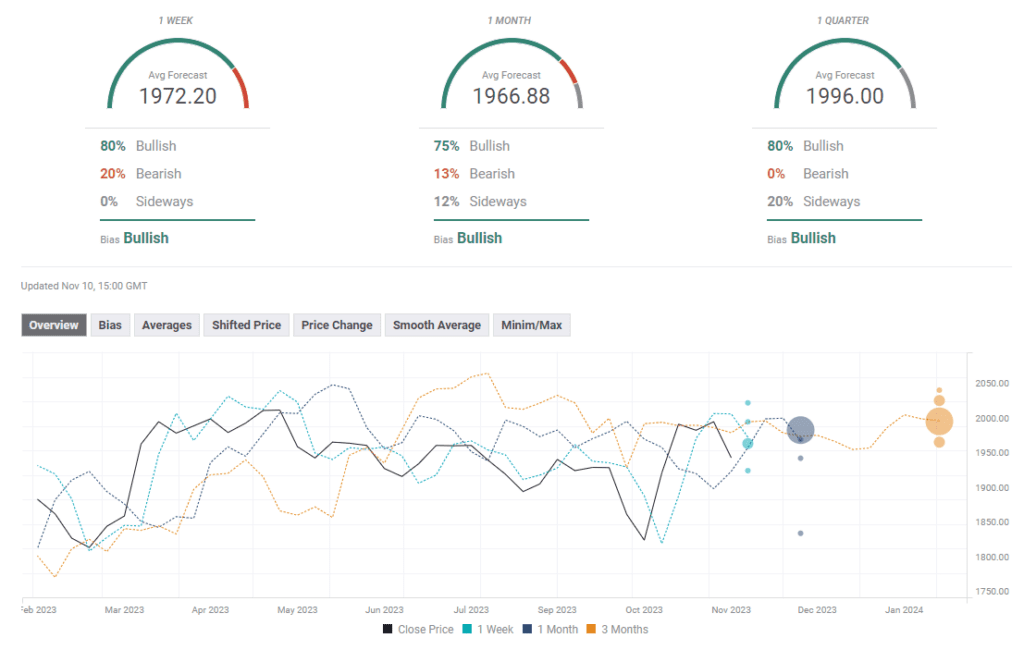
  • Expert Gold Price Forecast: Surging Trends Signal Bullish Outlook

    Expert Gold Price Forecast: Surging Trends Signal Bullish Outlook

    Insights and Analysis: Unveiling the Latest Gold Price Forecast Trends

    In the realm of financial markets, one of the most closely monitored and speculated commodities is gold. Investors worldwide keep a keen eye on its price movements, seeking insights into economic stability, geopolitical tensions, and inflationary pressures. Today, we delve into the realm of gold price forecasting, exploring the intricate dynamics that drive its valuation. With expert insights from Citi analysts, we uncover the latest trends shaping the future of gold prices amidst global uncertainties.

    Factors Influencing Gold Price Forecast

    Central bank gold purchases, alongside global economic conditions and geopolitical risks, play pivotal roles in determining the trajectory of gold prices. Central banks worldwide engage in gold purchases as a strategic move to diversify their reserves and mitigate risks associated with currency fluctuations. The scale and pace of these purchases significantly impact market sentiment and supply-demand dynamics.

    Moreover, the broader economic landscape, including factors such as inflation rates, interest rate policies, and currency valuations, exerts substantial influence on gold prices. Global recessions or periods of economic instability often drive investors towards safe-haven assets like gold, leading to increased demand and upward pressure on prices.

    Citi Analysts’ Insights

    Citi analysts offer valuable insights into the gold price forecast, leveraging their expertise to navigate through complex market dynamics. Their analyses consider a myriad of factors, including central bank gold purchases, global economic trends, and geopolitical risks. According to Citi’s assessments, the outlook for gold prices appears bullish, fueled by surging trends in key market indicators.

    Central bank gold purchases continue to escalate, reflecting a growing appetite for the precious metal among sovereign entities. This trend underscores the significance of gold as a reserve asset, especially amidst uncertainties surrounding traditional currencies and financial markets.

    Additionally, the looming specter of a global recession remains a pivotal factor in shaping gold price forecasts. Citi analysts emphasize the potential for economic downturns to drive investors towards safe-haven assets, bolstering gold demand and propelling prices upwards.

    Comparison with Previous Forecasts

    A retrospective analysis of previous gold price forecasts offers invaluable insights into the efficacy of predictive models and the reliability of forecasting methodologies. By meticulously scrutinizing past predictions and juxtaposing them against actual market outcomes, analysts can discern patterns, identify trends, and refine their forecasting strategies.

    This retrospective examination serves as a critical tool for assessing the accuracy and robustness of forecasting models. Analysts meticulously dissect past forecasts, evaluating the factors considered, methodologies employed, and assumptions made. By delving into the nuances of past predictions, analysts gain a deeper understanding of the intricacies of gold price dynamics and the myriad factors that influence market movements.

    Moreover, comparing past forecasts against actual market outcomes provides a reality check for analysts, highlighting areas of strength and areas for improvement. It allows analysts to identify patterns of overestimation or underestimation, enabling them to recalibrate their models and fine-tune their forecasting methodologies accordingly.

    Furthermore, this comparative analysis facilitates the identification of emerging trends and shifts in market dynamics. By discerning discrepancies between forecasted and actual prices, analysts can uncover hidden variables, unforeseen events, and market anomalies that may have influenced outcomes. This deeper understanding enables analysts to adapt to changing market conditions and enhance the accuracy of future forecasts.

    Ultimately, the process of comparing previous forecasts against actual market outcomes is a continuous journey of learning and refinement. It empowers analysts to evolve their methodologies, incorporate new data sources, and leverage advanced analytical techniques to enhance forecast accuracy. By embracing this iterative approach to forecasting, analysts can navigate the complexities of the gold market with greater precision and confidence, ultimately providing investors with more reliable and actionable insights.

    Expert Commentary and Opinions

    In the realm of gold price forecasting, the insights provided by industry experts are indispensable for investors seeking to navigate the complexities of the market landscape. These experts bring a wealth of experience and expertise to the table, offering nuanced perspectives and informed analyses that shed light on emerging trends and market dynamics.

    Drawing upon their deep understanding of the gold market, industry experts conduct thorough analyses that encompass a wide array of factors. These factors may include central bank policies, geopolitical tensions, macroeconomic indicators, supply-demand dynamics, and investor sentiment, among others. By meticulously examining these multifaceted variables, experts are able to discern patterns, identify correlations, and anticipate potential market movements with greater accuracy.

    Moreover, industry experts possess a keen awareness of the interplay between different factors and their collective impact on gold prices. They understand that gold is influenced not only by traditional economic indicators but also by geopolitical developments, such as trade tensions, conflicts, and geopolitical uncertainties. By synthesizing diverse viewpoints and integrating insights from various disciplines, experts provide investors with a comprehensive understanding of the underlying forces driving gold price movements.

    One of the key strengths of expert commentary and opinions lies in their ability to offer actionable insights and informed perspectives. Whether it’s a nuanced analysis of central bank policies, a deep dive into geopolitical risks, or a macroeconomic overview, experts provide investors with valuable information that can inform their investment decisions. By leveraging these insights, investors can formulate well-informed strategies that align with their risk tolerance, investment objectives, and market outlook.

    Furthermore, expert commentary serves as a vital source of guidance and reassurance for investors navigating uncertain market conditions. In times of volatility and instability, such as economic downturns or geopolitical crises, expert opinions can provide much-needed clarity and perspective. By offering reasoned analysis and informed commentary, experts help investors make sense of complex market dynamics and stay ahead of emerging trends.

    Implications for Investors

    Navigating the volatile landscape of gold markets necessitates a strategic approach and a profound comprehension of underlying fundamentals. As investors chart their course through the ever-shifting tides of market dynamics, it becomes imperative to recognize the implications of gold price forecasts and integrate them into their investment strategies.

    First and foremost, diversification emerges as a cornerstone principle for investors seeking to weather the fluctuations of the gold market. By spreading their investments across a spectrum of asset classes, including equities, bonds, real estate, and commodities like gold, investors can mitigate risks and enhance the resilience of their portfolios. Diversification serves as a bulwark against the inherent uncertainties and volatilities of individual markets, ensuring that the overall portfolio remains robust and well-positioned to withstand unforeseen challenges.

    Moreover, incorporating gold assets into investment strategies holds significant implications for investors seeking to hedge against inflationary pressures and safeguard their wealth. Gold has long been regarded as a store of value and a hedge against currency depreciation, making it an attractive asset during periods of economic uncertainty and inflationary pressures. By allocating a portion of their portfolios to gold assets, investors can effectively hedge against the erosive effects of inflation and preserve the purchasing power of their wealth over time.

    Furthermore, gold assets offer a unique proposition for investors seeking to capitalize on emerging opportunities and navigate market uncertainties. In times of economic turmoil or geopolitical unrest, gold tends to exhibit a negative correlation with other asset classes, such as equities and bonds, thereby providing a safe haven for investors seeking refuge from market turbulence. By strategically allocating resources to gold assets, investors can enhance the diversification of their portfolios and reduce overall portfolio volatility, while simultaneously positioning themselves to capitalize on potential upside opportunities in the gold market.

    Conclusion

    As we navigate through the intricate landscape of gold price forecasting, it becomes evident that multiple factors converge to shape market outcomes. Central bank gold purchases, global economic conditions, and geopolitical risks serve as key determinants of gold price trends, influencing investor sentiment and market dynamics. By leveraging expert insights and analyzing emerging trends, investors can navigate through volatile markets and capitalize on lucrative opportunities in the realm of gold investments.

  • Gold Throttling: Empowering Strategies to Navigate Dollar Influence and Foster Resilience

    Gold Throttling: Empowering Strategies to Navigate Dollar Influence and Foster Resilience

    Understanding the Dynamic Relationship Between Gold and the Dollar: Strategies to Navigate Market Volatility and Optimize Investment Opportunities

    Gold, revered as a timeless symbol of wealth and stability, shares an intricate relationship with the movements of the US dollar, the primary reserve currency globally. This relationship, often characterized by an inverse correlation, holds significant sway over market dynamics and profoundly influences investment strategies. For investors aiming to capitalize on market opportunities while effectively managing risks, a deep dive into the complexities of this dynamic interplay is indispensable.

    The interplay between gold and the dollar is multifaceted, influenced by a myriad of factors including economic indicators, geopolitical events, and market sentiment. Throughout history, gold has functioned as a hedge against inflation and currency depreciation, rendering it an appealing asset during periods of economic uncertainty. Conversely, the strength of the dollar can impact gold demand, as a robust dollar makes gold relatively more expensive for investors holding other currencies.

    Grasping the nuances of this relationship demands a holistic approach that considers both short-term fluctuations and long-term trends. While short-term movements in the gold price may be swayed by factors like interest rate decisions and geopolitical tensions, long-term trends are often shaped by broader economic fundamentals and structural shifts in the global economy.

    One pivotal aspect of the gold-dollar relationship is the influence of monetary policy decisions, particularly those of the Federal Reserve. The Fed’s interest rate determinations can wield a significant impact on both the dollar and gold prices. For instance, a hawkish monetary policy stance, marked by higher interest rates, typically bolsters the dollar and suppresses gold prices, while a dovish stance tends to have the opposite effect.

    Geopolitical events and macroeconomic trends also play a pivotal role in shaping the gold-dollar relationship. Events such as geopolitical tensions, trade disputes, and economic downturns can breed uncertainty in financial markets, prompting investors to seek refuge in safe-haven assets like gold. Conversely, periods of economic prosperity and stability may bolster the dollar and diminish demand for gold.

    Effectively navigating the intricacies of the gold-dollar relationship necessitates a strategic approach that integrates both fundamental analysis and technical indicators. Fundamental analysis entails evaluating economic data, central bank policies, and geopolitical developments to decipher the underlying factors steering gold and dollar movements. Meanwhile, technical analysis focuses on chart patterns and price trends to pinpoint potential entry and exit points for trades.

    By melding fundamental and technical analysis, investors can cultivate a comprehensive understanding of the gold-dollar relationship and make well-informed investment decisions. By remaining attuned to economic developments, monitoring market sentiment, and analyzing price trends, investors can identify opportunities to profit from fluctuations in the gold price relative to the dollar.

    In addition to comprehending the factors steering the gold-dollar relationship, investors should also take into account the broader macroeconomic landscape and market dynamics. Variables such as interest rates, inflation expectations, and the strength of other currencies can all influence the relative attractiveness of gold as an investment asset.

    Furthermore, investors must remain cognizant of the risks associated with trading gold and other commodities. Market volatility, geopolitical events, and unforeseen economic developments can all sway the price of gold, potentially resulting in losses for investors. Implementing risk management strategies, such as setting stop-loss orders and diversifying portfolios, is imperative to mitigating these risks and safeguarding capital.

    Conclusion

    In conclusion, the relationship between gold and the dollar is a complex and multifaceted one that is influenced by a myriad of factors. By understanding the drivers of this relationship and adopting a strategic approach to investment, investors can capitalize on market opportunities while managing risks effectively. Whether trading gold as a speculative asset or as a long-term store of value, staying informed and adaptable is key to success in the dynamic world of commodities trading.

  • Former Treasury Secretary Larry Summers Warns of Fed Rate Hike Amid Inflation Concerns

    Former Treasury Secretary Larry Summers Warns of Fed Rate Hike Amid Inflation Concerns

    Larry Summers predicts a ‘meaningful’ chance of a Fed rate hike, citing strong economic data and persistent inflationary pressures.

    Larry Summers, former Treasury Secretary and renowned economist, has sounded the alarm on the possibility of a Federal Reserve rate hike amidst mounting inflationary pressures. In an exclusive interview with Bloomberg TV, Summers emphasized a “meaningful” chance of the Fed’s next move being an upward adjustment in interest rates, rather than a cut, as many had previously anticipated.

    Summers’ warning comes against the backdrop of a streak of robust economic data coupled with persistent inflationary trends. Citing recent key indicators, including a 3.1% year-over-year increase in the consumer price index and a 0.9% rise in the producer price index, Summers highlighted the urgency for the Fed to tread cautiously in its monetary policy decisions.

    “It’s always a mistake to over-interpret one month’s number — and that’s especially true in January, where calculating seasonality is difficult,” Summers cautioned. “But I think we have to recognize the possibility of a mini-paradigm shift.”

    Summers drew attention to specific sectors that are bucking the deflationary trend, such as owner-occupied houses in suburban areas and core services prices driven by escalating wages. He noted a concerning uptick in “super-core” prices, which exclude food and energy costs, suggesting underlying inflationary pressures may be more pronounced than previously thought.

    The prevailing narrative on Wall Street had largely revolved around expectations of a rate cut by the Fed, with initial projections pointing towards a possible reduction as early as March. However, as inflationary concerns persist and economic indicators remain robust, forecasts for rate cuts have been continuously pushed back, with June now seen as the earliest plausible timeline.

    Summers underscored the Fed’s delicate balancing act between addressing inflationary pressures and sustaining economic growth. “The worst thing you can do when the doctor prescribes you antibiotics is finish part of the course, feel better, give up on the antibiotics because you don’t like taking them and see what happens,” he analogized. “The disease tends to come back and it tends to be harder to go after the second time.”

    Summers’ warnings reverberate across financial markets, prompting investors to reassess their expectations and positioning in light of a potential shift in monetary policy direction. As markets await further cues from the Federal Reserve, the specter of a rate hike looms large, underscoring the importance of vigilance and adaptability in navigating evolving market dynamics.

    Conclusion

    In conclusion, Larry Summers’ cautionary remarks serve as a sobering reminder of the complexities facing monetary policymakers amid a backdrop of inflationary pressures and economic uncertainties. With the prospect of a Fed rate hike on the horizon, market participants are bracing for heightened volatility and recalibrating their strategies to navigate the evolving macroeconomic landscape.

  • January Wholesale Prices Surge, Adding Pressure Amid Persistent Inflation Concerns

    January Wholesale Prices Surge, Adding Pressure Amid Persistent Inflation Concerns

    Labor Department Report Reveals Higher-Than-Expected Increase in Producer Price Index (PPI), Fueling Worries Over Inflation’s Resilience

    In a recent turn of events, January has brought forth a concerning surge in wholesale prices, casting a shadow over hopes for a swift resolution to inflationary pressures. The latest report from the Labor Department has sent ripples through financial markets, underscoring the persistent challenges posed by inflation despite earlier expectations of a slowdown.

    The Producer Price Index (PPI), a key metric tracking prices received by producers of domestic goods and services, rose by a substantial 0.3% in January. This uptick, the most significant since August, exceeded economists’ projections, who had anticipated a more modest increase of just 0.1%. The unexpected jump in wholesale prices has intensified concerns about the inflationary backdrop, painting a picture of economic conditions that are more resilient to the Federal Reserve’s efforts to curb price pressures.

    Of particular concern is the core PPI, which excludes volatile food and energy prices. This measure surged by 0.5%, further surpassing expectations and highlighting the broad-based nature of inflationary pressures across various sectors of the economy. Moreover, when excluding not only food and energy but also trade services, the core PPI recorded its most significant one-month advance since January 2023, climbing by 0.6%. Such robust increases in wholesale prices signal a deep-seated challenge that policymakers must grapple with in their efforts to maintain price stability.

    This concerning uptick in wholesale prices comes on the heels of another troubling report: the Consumer Price Index (CPI) for January. Despite expectations for a moderation in inflation, the CPI revealed that prices paid by consumers remained stubbornly elevated, with a year-over-year increase of 3.1%. While this figure represented a slight decrease from December levels, it still far exceeded the Federal Reserve’s target of 2% inflation, underscoring the magnitude of the inflationary challenge.

    The divergence between expectations and reality has sent shockwaves through financial markets, prompting a sharp sell-off in stocks and a surge in Treasury yields. Investors, who had previously anticipated aggressive interest rate cuts by the Federal Reserve in response to easing inflationary pressures, are now recalibrating their expectations in light of the latest data. Just weeks ago, markets had priced in the possibility of a rate cut as early as March, but such expectations have since been pushed back to June as policymakers adopt a more cautious stance.

    The repercussions of the inflationary surge extend beyond financial markets to the broader economy. Retail sales for January, as reported by the Commerce Department, registered a significant decline of 0.8%, far surpassing expectations. This unexpected downturn in consumer spending underscores the challenges faced by businesses and households alike in navigating an environment of elevated prices.

    A closer look at the components driving the increase in wholesale prices reveals a mixed picture. While final demand services saw a notable 0.6% increase, fueled in part by a 2.2% rise in hospital outpatient care, goods prices experienced a slight decrease of 0.2%. The decline in goods prices was primarily driven by a 1.7% drop in final demand energy, with gasoline prices sliding by 3.6%. However, despite these fluctuations, the overall trend points to a persistent inflationary backdrop that shows little sign of abating.

    Looking ahead, policymakers face a delicate balancing act as they seek to address inflationary pressures without jeopardizing economic growth. The Federal Reserve, tasked with maintaining price stability and full employment, must carefully calibrate its monetary policy stance to navigate the current environment. While the latest data paint a sobering picture of inflation’s resilience, the Fed remains committed to its dual mandate and will continue to monitor economic developments closely.

    January Wholesaler Prices Exceed Expectations, Sparking Sharp Rise in Treasury Yields

    In a tumultuous day for financial markets, the yield on the 10-year Treasury spiked above the closely watched threshold of 4.3%, propelled by a surge in wholesaler prices that caught many analysts off guard. The latest data, released on Friday, revealed a sharper-than-expected increase in producer prices, reigniting fears of inflationary pressures and sending shockwaves through bond markets.

    The yield on the benchmark 10-year Treasury, a key gauge of borrowing costs and market sentiment, surged by 6 basis points to 4.295%, inching perilously close to the psychologically significant 4.3% level. Meanwhile, the 2-year Treasury yield experienced an even more pronounced uptick, rising by 9 basis points to 4.66%. At its peak, the 2-year yield reached 4.718%, marking its highest level since December 13.

    The sharp rise in Treasury yields reflects investors’ growing concerns over the inflationary backdrop and its implications for monetary policy. Historically, Treasury yields and bond prices have an inverted relationship, meaning that as yields rise, bond prices fall. This inverse correlation is driven by investors’ expectations of future interest rates and inflation.

    The unexpected surge in wholesaler prices for January has heightened fears that inflationary pressures may be more entrenched than previously anticipated. The Producer Price Index (PPI), a key measure of inflation at the wholesale level, rose by a significant margin, surpassing economists’ forecasts. This strong uptick in producer prices has raised questions about the resilience of inflation and its potential to erode purchasing power and undermine economic stability.

    Investors are closely monitoring economic indicators such as producer prices for signals about the trajectory of inflation and its impact on financial markets. Inflation erodes the real value of fixed-income investments like Treasury bonds, prompting investors to demand higher yields as compensation for the erosion of purchasing power. Consequently, rising Treasury yields can reflect heightened concerns about inflation and expectations of tighter monetary policy.

    The surge in Treasury yields has reverberated across global financial markets, with implications for a wide range of asset classes. Higher yields on government bonds can attract capital away from riskier assets such as stocks and commodities, as investors seek safer returns in fixed-income securities. This dynamic can lead to increased volatility in equity markets and adjustments in asset allocations as investors reassess their risk exposures.

    Central banks, including the Federal Reserve, are closely monitoring developments in bond markets amid concerns about the potential impact on broader economic conditions. The Federal Reserve has a dual mandate to promote price stability and maximum employment, and fluctuations in bond yields can have significant implications for achieving these objectives. A sharp rise in Treasury yields could tighten financial conditions, potentially slowing economic growth and complicating the central bank’s policy decisions.

    The surge in Treasury yields comes at a time of heightened uncertainty in global markets, with investors grappling with a range of geopolitical and economic risks. From geopolitical tensions to supply chain disruptions and concerns about the pace of economic recovery, investors are navigating a complex landscape fraught with challenges. Against this backdrop, the sharp rise in Treasury yields adds another layer of complexity to market dynamics, underscoring the importance of staying vigilant and nimble in response to changing conditions.

    Looking ahead, investors will be closely monitoring upcoming economic data releases and central bank communications for clues about the future trajectory of monetary policy. Key indicators to watch include consumer price inflation, labor market data, and statements from central bank officials. In an environment of heightened uncertainty, staying informed and maintaining a diversified investment approach are essential for navigating the evolving market landscape.

    Conclusion

    In conclusion, the surge in Treasury yields above 4.3% following the hot producer prices report highlights the challenges facing investors in an environment of heightened inflationary pressures and market volatility. The sharp rise in yields underscores the importance of staying vigilant and adaptive in response to changing economic conditions, as investors seek to navigate the complexities of today’s global markets. Additionally, the surge in wholesale prices in January has added to the mounting concerns surrounding inflation, emphasizing the persistent challenges faced by policymakers. With financial markets reacting sharply to the latest data, the road ahead promises to be fraught with uncertainty. As the Federal Reserve navigates these choppy waters, all eyes will be on its monetary policy decisions and their implications for the broader economy.

  • Gold Price Weekly Forecast: Optimistic Projections for Bullish Gold Investors

    Gold Price Weekly Forecast: Optimistic Projections for Bullish Gold Investors

    In this week’s Gold Price Weekly Forecast, we delve into the factors that are likely to influence the precious metal market, analyze the potential impact of the US October inflation data, and provide insights into the gold technical outlook. As we navigate the complexities of the global economy, understanding these key aspects is vital for both seasoned and novice investors in the gold market.

    Before we delve into the upcoming events and technical indicators that will define the gold price weekly forecast, it’s essential to thoroughly examine the multifaceted factors that have exerted their influence on the price of gold in recent times. Gold, often referred to as the “safe-haven” asset, has a unique sensitivity to global economic, political, and financial developments. Here’s a deeper dive into the factors that have been instrumental in shaping the current dynamics of the gold market:

    1. Uninspiring Chinese Data: China, as the world’s largest consumer of gold, plays a pivotal role in influencing the precious metal’s price. Economic data coming out of China, especially indicators related to its growth, trade surplus, and consumer activity, are closely monitored by the global financial community. In recent times, Chinese economic data has been less than inspiring, contributing to the cautious sentiment in the gold market. A weaker Chinese economy can reduce demand for gold, as it reflects broader economic uncertainty.
    2. Geopolitical Tensions: The ebb and flow of geopolitical tensions have a profound impact on gold prices. Gold has historically been sought after as a safe haven during times of international crises, conflicts, and uncertainty. In recent weeks, there has been a gradual easing of some geopolitical tensions, particularly in regions that were previously sources of concern. This reduction in geopolitical risk has partially tempered the demand for gold as a hedge against instability. However, it’s essential to note that geopolitical developments can change rapidly, and gold remains a reliable asset for investors seeking refuge during periods of uncertainty.
    3. Monetary Policy and Interest Rates: The policies of central banks, particularly the Federal Reserve in the United States, have a direct bearing on gold prices. Gold is inversely correlated with interest rates; when interest rates are low, the opportunity cost of holding non-yielding gold is reduced, making it more attractive to investors. Conversely, when interest rates rise, gold may become less appealing compared to interest-bearing assets. Therefore, the outlook for monetary policy and interest rates can significantly impact gold prices. The gold market often responds to statements and actions taken by central bank officials.
    4. Currency Movements: Gold is traded internationally, and its price is denominated in various currencies. Exchange rate fluctuations can influence gold prices. A weaker US Dollar, for instance, can make gold more affordable for international buyers and tend to push its price higher. Conversely, a stronger dollar can have the opposite effect. Gold often serves as a hedge against currency devaluation and can see increased demand when currencies are under pressure.
    5. Market Sentiment and Risk Appetite: Investor sentiment and risk appetite also play a role in determining gold prices. During times of economic optimism and bullish stock markets, investors may allocate fewer resources to gold. However, when sentiment turns bearish, or there are concerns about market volatility, gold often shines as a haven asset. The overall perception of risk in the financial markets can influence the demand for gold as a portfolio diversifier and safe-haven asset.

    Understanding these multifaceted factors is essential for investors and traders as they navigate the gold market. The interplay between these elements creates a complex and dynamic landscape for gold pricing, making it imperative to stay attuned to global developments and their potential impact on the precious metal’s value. In the next sections, we’ll delve deeper into specific events and technical indicators that will shape the gold price weekly forecast.

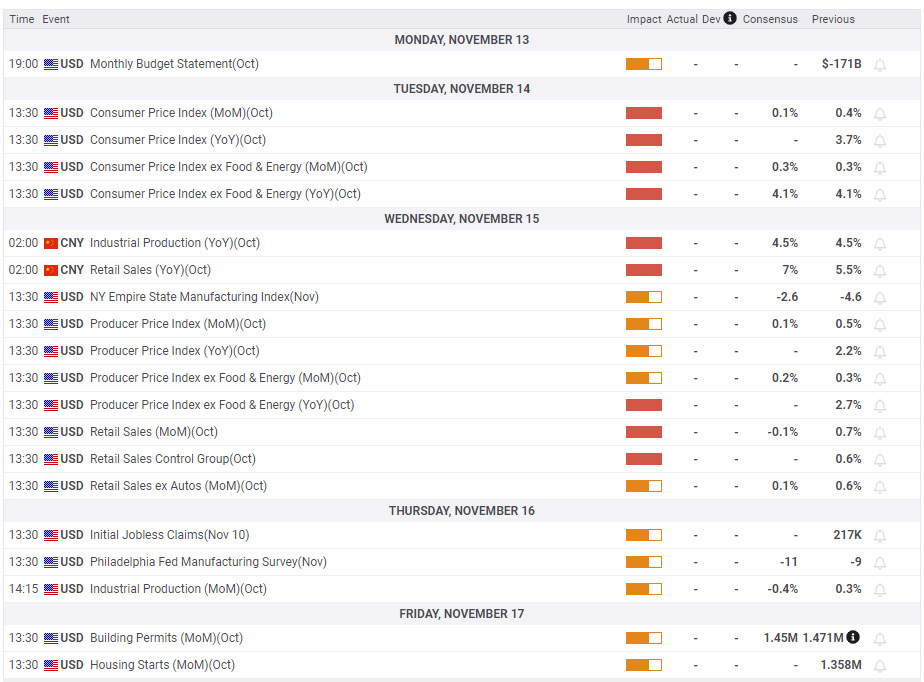
    One of the most eagerly awaited events on the economic calendar is the release of the US October inflation data. This data point has the potential to significantly influence the direction of gold prices in the coming week. As we assess the prospects for gold, understanding the implications of this data is paramount.

    Investors and analysts are closely monitoring the Consumer Price Index (CPI) for October, which is forecasted to rise by 0.1% on a monthly basis. Additionally, the Core CPI, which excludes volatile food and energy prices, is expected to increase by 0.3%. These numbers will be closely scrutinized, as they could set the tone for the broader market sentiment.

    The CME Group FedWatch Tool currently shows that markets are pricing in a 90% probability that the Federal Reserve (Fed) will leave the policy rate unchanged at 5.25%-5.5% in December. This positioning suggests that any deviation from the expected inflation readings could lead to a significant market reaction.

    In the event of a stronger-than-forecast inflation reading, the market may reassess its outlook on interest rates, potentially bolstering the US Dollar (USD). Should this scenario unfold, we could witness upward pressure on the 10-year US yield, which, in turn, may cause gold (XAU/USD) to extend its slide. However, the opposite holds true for a weaker-than-expected Core CPI print, which may dampen the demand for USD, making it challenging for gold to gather bullish momentum, unless geopolitical tensions resurge.

    Gold Price Weekly Forecast
    Source:FXS

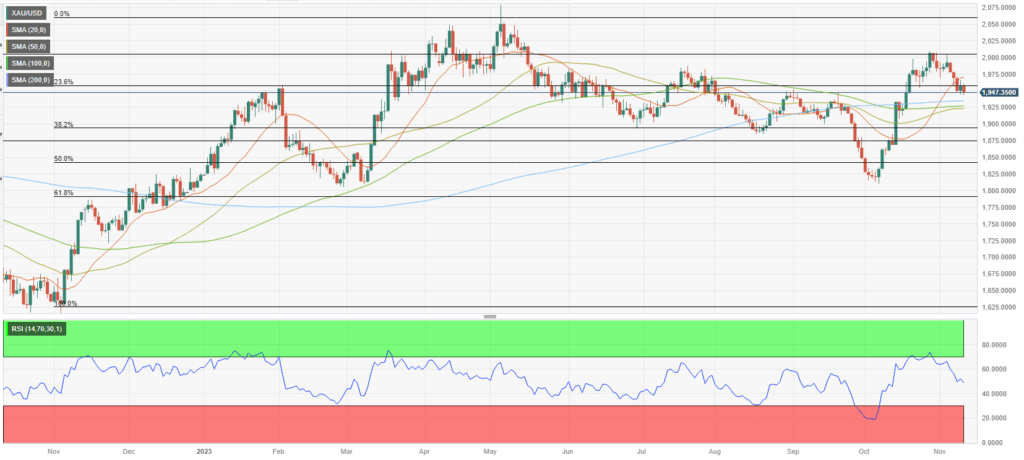
    Turning our attention to the technical aspects of gold, let’s examine the gold technical outlook. The Relative Strength Index (RSI) indicator on the daily chart retreated to 50, reflecting a loss of bullish momentum in XAU/USD. This suggests that investors are currently taking a cautious approach.

    Gold Price Weekly Forecast

    Significant support appears to have formed in the range of $1,925 to $1,930, where the 200-day Simple Moving Average (SMA), 100-day SMA, and the 50-day SMA converge. If gold falls below this area and starts using it as resistance, the next bearish target could be the psychological level of $1,900, followed by the Fibonacci 38.2% retracement level of the long-term uptrend at $1,875.

    On the upside, immediate resistance is seen at $1,960, which aligns with the Fibonacci 23.6% retracement level. A daily close above this level could attract buyers and open the door for an extended rebound toward $2,000, a psychological and static resistance level that has drawn significant attention from investors.

    Gold Price Weekly Forecast

    To gain a deeper understanding of the gold market’s dynamics, it is essential to engage in precious metal market analysis. This comprehensive analysis involves evaluating various economic factors, geopolitical events, and central bank policies that influence the value of precious metals like gold.

    The recent fluctuations in gold prices have been driven not only by domestic factors but also by global events and monetary policies. This underscores the interconnectedness of the precious metal market with the broader financial landscape.

    The Federal Reserve’s policies play a pivotal role in shaping the performance of precious metals, including gold. Fed Chairman Jerome Powell’s statements and the central bank’s approach to policy decisions are closely monitored by investors. Powell’s recent remarks emphasized the Fed’s data-dependent approach to policy, making decisions based on incoming data and their implications for economic activity and inflation.

    While Powell noted the central bank’s commitment to data-driven decision-making, he expressed uncertainty about achieving a “sufficiently restrictive” policy stance to bring inflation down to the 2% target over time. This comment had a notable impact on the market, triggering a rally in US bond yields and influencing gold’s weekly performance.

    In conclusion, as we anticipate the release of the US October inflation data and closely monitor the gold technical outlook, there is a sense of cautious optimism among bullish gold investors. The market is poised for potential shifts in response to economic data, central bank policies, and global events.

    The precious metal market analysis underscores the importance of staying informed and agile in navigating the dynamic world of gold trading. Federal Reserve policy impact serves as a reminder of the critical role that central banks play in influencing the performance of precious metals.

    As we embark on the upcoming week, gold investors will need to adapt to changing market conditions while keeping a keen eye on support and resistance levels. The gold price weekly forecast remains a crucial tool for investors seeking to make informed decisions in this ever-evolving landscape.

    Click here to read our latest article on

  • EUR/USD Forecast: Surging Towards Success with a Positive Outlook

    EUR/USD Forecast: Surging Towards Success with a Positive Outlook

    In recent times, global financial markets have experienced notable shifts, prominently featuring the EUR/USD exchange rate. This in-depth EUR/USD forecast investigates the driving factors behind this currency pair’s movement. We also assess the repercussions of crucial events like US inflation data and the Dollar’s decline while considering the wider context of currency exchange rate analysis and expectations regarding Federal Reserve interest rates.

    The recent turmoil in the financial markets centers around the exceptional rally in the EUR/USD exchange rate. Market participants have been closely monitoring this currency pair due to its sustained strength, making the EUR/USD forecast a subject of considerable interest.

    One of the principal catalysts driving this surge is the abrupt depreciation of the US Dollar. This devaluation was triggered by the unexpected release of pivotal US inflation data, catching the markets off guard. The subsequent sell-off of the Dollar had a profound impact on the EUR/USD exchange rate, propelling it to a substantial gain of approximately 200 pips. This surge represents the pair’s most significant daily upswing in months, potentially paving the way for a sustained upward trajectory.

    To gain a comprehensive understanding of the prevailing dynamics, it’s crucial to delve deeper into the US inflation data that precipitated the Dollar’s decline. In the month of October, the US Consumer Price Index (CPI) defied expectations by remaining stagnant, contrary to forecasts of a 0.1% increase. Additionally, the annual inflation rate registered at 3.2%, falling short of the prior month’s 3.7% figure. Notably, core inflation, which excludes the volatile components of food and energy prices, decelerated more than anticipated.

    The response to this unforeseen inflation data was swift and significant. Investors, in search of safe-haven assets, drove a rally in Treasury bonds, while Wall Street stocks recorded gains. However, the most remarkable outcome was the sharp depreciation of the Greenback, which plunged to its lowest levels in a month. The resultant Dollar selloff, triggered by the underwhelming inflation metrics, further amplified the bullish momentum of the EUR/USD pair.

    To gain a more profound insight into the surge in the exchange rate, it’s imperative to conduct a comprehensive currency exchange rate analysis. This entails assessing various economic factors that impact the relative value of currencies. In the context of the EUR/USD forecast, we scrutinize the Euro (EUR) in comparison to the US Dollar (USD).

    A pivotal factor influencing this currency pair is the divergence in economic performance between the United States and the Eurozone. While the US economy continued to exhibit growth above its typical trajectory, the Eurozone experienced a contraction of 0.1% during the third quarter. This divergence has significantly bolstered the Dollar’s standing in recent months.

    Nevertheless, it’s vital to recognize that the EUR/USD forecast isn’t solely contingent on historical economic performance. Market sentiment and expectations hold equal sway. The recent underperformance of US inflation data, falling short of forecasts, has solidified the market’s anticipation that the Federal Reserve will likely refrain from raising interest rates in the near future. This dovish outlook has contributed to the Dollar’s decline and the Euro’s ascent.

    Anticipations regarding the Federal Reserve’s interest rate policy hold significant weight in the EUR/USD forecast. The monetary policy decisions of this central bank exert a substantial influence on the currency markets. Presently, market sentiment seems to lean toward an expectation that the Fed will maintain its accommodative stance, especially in light of the subdued inflation data. This perception has prompted a reevaluation of the Dollar’s prospects, further reinforcing the Euro’s position.

    As we look to the future, it’s crucial to keep an eye on forthcoming economic data releases, which have the potential to mold the trajectory of the EUR/USD exchange rate. Specifically, market participants will closely monitor the unveiling of the Producer Price Index (PPI) and the October Retail Sales report. Should signs of inflation easing persist, coupled with a subdued consumer sentiment, it could leave the US Dollar susceptible to pressure in the near term. However, it’s important to acknowledge that the narrative might pivot if the United States experiences a resurgence in economic outperformance.

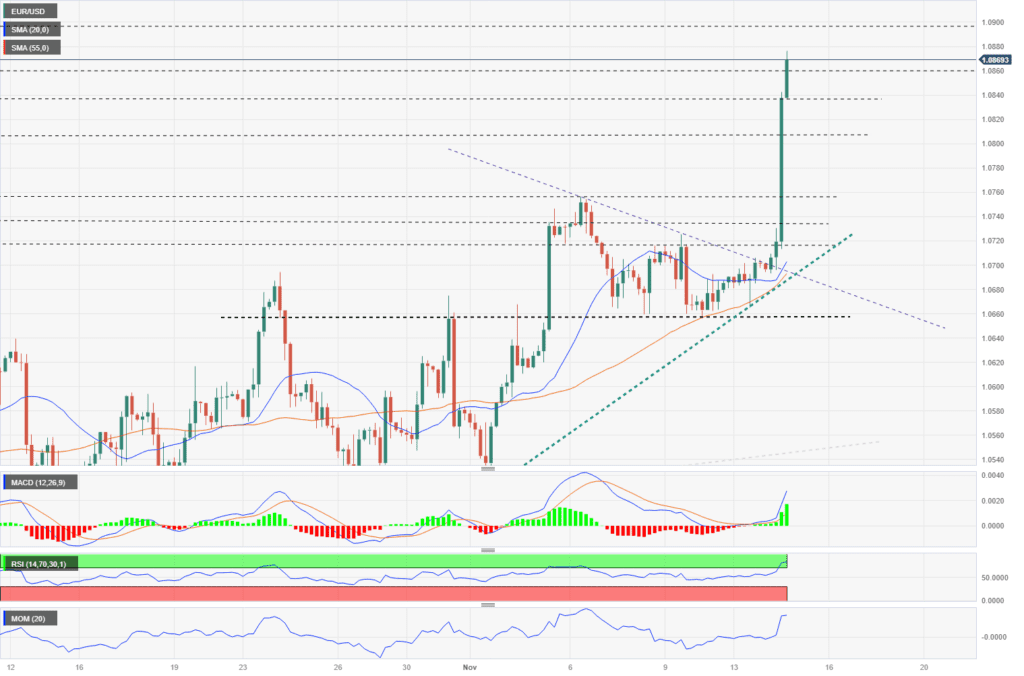
    Shifting our focus to technical analysis, the charts offer valuable insights into the recent performance and future prospects of the EUR/USD pair. Notably, on the daily chart, a significant development has unfolded—the EUR/USD pair has surged above both the 100-day and 200-day Simple Moving Averages (SMA), marking this achievement for the first time since August. Additionally, the 20-day SMA has crossed over the 55-day SMA, fortifying the optimistic outlook.

    EUR/USD Forecast
    EUR/USD SHORT TERM TECHNICAL OUTLOOK
    Source:FXS

    Examining the Relative Strength Index (RSI), a widely used momentum indicator, we find it residing in the overbought region on the daily chart. However, it’s noteworthy that there are no apparent indications of the current trend showing signs of exhaustion. This suggests the potential for the bullish momentum to persist, though it is paramount to exercise prudent risk management practices.

    Upon examining the 4-hour chart, it becomes evident that the EUR/USD pair’s price is actively aiming for the subsequent resistance threshold, even as the overbought readings on the RSI are overlooked. The forthcoming substantial resistance levels to keep an eye on are positioned at 1.0900 and 1.0930. These levels hold the potential to act as pivotal milestones in the EUR/USD’s upward journey.

    It’s essential to acknowledge that within the ongoing bullish cycle, there exists the possibility of a retracement to the level of 1.0850. Such a correction, however, would not necessarily compromise the prevailing upward inclination. Nevertheless, it remains imperative for traders and investors to maintain a vigilant stance and closely monitor critical support levels to evaluate the durability of the optimistic outlook.

    To sum up, the EUR/USD forecast paints a positive picture for the Euro against the US Dollar. The recent upswing in this currency pair, fueled by the Dollar’s decline after the release of US inflation data, has garnered widespread attention among market participants. Although the divergence in economic performance between the US and the Eurozone has bolstered the Dollar, recent US inflation figures have reshaped expectations concerning the Federal Reserve’s interest rate policies.

    Looking ahead, the EUR/USD exchange rate will remain susceptible to the influence of economic data releases and central bank actions. Market observers will vigilantly track indicators such as the Producer Price Index and Retail Sales reports to assess the Dollar’s vulnerability and potential shifts in market sentiment.

    From a technical analysis standpoint, the EUR/USD pair’s bullish momentum is palpable, with noteworthy resistance levels on the radar. Traders and investors should maintain a vigilant stance, adapting their strategies to evolving market dynamics while closely monitoring support and resistance thresholds.

    In this ever-evolving landscape, the EUR/USD forecast retains its significance for traders, investors, and those with a vested interest in the global financial markets. Stay well-informed and ahead of the curve as we continue to monitor the dynamic developments within this currency pair.

    Click here to read our latest article on Dollar Rises as Market Weighs Fed Officials’ Upcoming Speeches

  • Dollar Rises as Market Weighs Fed Officials’ Upcoming Speeches on Rate Policy

    Dollar Rises as Market Weighs Fed Officials’ Upcoming Speeches on Rate Policy

    In a recent turn of financial events, the dollar rises on the back of shifting expectations and central bank officials’ commentary. Investors, who had been speculating on the end of the Federal Reserve’s aggressive interest rate hikes, are now recalibrating their positions. The U.S. currency’s rebound signifies a complex interplay of economic indicators, policy prognostications, and market sentiment.

    The pivot point for the dollar’s resurgence comes amid growing anticipation for the Federal Reserve’s next move. After the U.S. dollar hit an almost 8-week low, the market witnessed a marginal rise against the euro, an outcome of mixed signals regarding the Fed’s rate hike trajectory. This week, all eyes are on Fed Chairman Jerome Powell, whose upcoming addresses are expected to shed light on the central bank’s rate policy direction.

    In the wake of the Fed’s last two-day meeting, Powell’s somewhat dovish remarks hinted at a potential pause in the rate hike cycle. However, the consensus was not as clear-cut as it appeared. “Even though last week’s statement was unanimous, I do suspect that Powell’s view isn’t very widely shared,” expressed Bipan Rai, the head of FX strategy at CIBC Capital Markets. This sets the stage for a nuanced understanding of the future rate path, as divergent views between the so-called doves and hawks within the Federal Open Market Committee (FOMC) emerge.

    Inflation remains at the forefront of the Fed’s considerations, with Fed Governor Lisa Cook expressing hope that the current target interest rate will reel inflation back to the Fed’s 2% objective. The weaker-than-expected jobs growth reported for October adds another layer, fueling expectations of a slowing U.S. economy. This development supports the argument for the Fed to halt rate increases, a move that usually has the effect of weakening the dollar.

    Yet, it’s the forthcoming Consumer Price Inflation (CPI) data that is touted to be the definitive judge of the need for further rate hikes. “Next week’s CPI print is going to be the best adjudicator we have,” noted Rai. A weaker CPI could shift focus to how much easing markets are pricing in for the next year, whereas a strong print might trigger a rebound in dollar buying.

    The euro has seen its own rally against the dollar stumble, in part due to economic weaknesses within the euro zone relative to the U.S. Any additional gains for the euro hinge on significant positive stimuli, which seems increasingly unlikely. A survey highlighting a downturn in euro zone business activity underscores this, raising the specter of a recession within the 20-country currency union.

    Currency intervention remains a topic of considerable interest, particularly in relation to the Japanese yen. After the yen edged close to the October 2022 lows—a level that previously triggered intervention by the Bank of Japan—the market has been speculating on potential new rounds of dollar-selling by Japanese authorities.

    The Australian dollar‘s situation illustrates the interconnectedness of global currency markets and central bank policies. Even as the Australian currency touched a three-month high, it fell against the strengthening U.S. dollar, with the Reserve Bank of Australia poised to raise its key policy rate in a bid to manage economic pressures domestically.

    Investors now tread a landscape where each data release, each central bank official’s comment can sway the tide for the dollar. The coming days are especially crucial, with Fed Chairman Powell’s speeches potentially serving as catalysts for the next market moves.

    The dollar’s rise, while modest, encapsulates the myriad forces at play in the international financial markets. As central banks across the globe navigate through economic signals and policy effects, the dollar’s trajectory will continue to be a key barometer of the collective market psyche, with implications far beyond the U.S. borders.

    As we await further cues, one thing remains certain—the intricate dance of currencies continues, with the dollar’s rise signaling a cautious but vigilant market, ready to parse through the Fed’s rhetoric for hints at the future of monetary policy.

    Click here to read our latest article on Australian Dollar Surge

  • Australian Dollar Surge: RBA’s Rate Hike Anticipation Amid Global Yield Fluctuations

    Australian Dollar Surge: RBA’s Rate Hike Anticipation Amid Global Yield Fluctuations

    Unraveling the Underpinnings of the Aussie Dollar’s Recent Rally and Impending Monetary Policy Decisions

    The recent events in the global financial sphere have spotlighted the Australian Dollar Surge, an undeniable force shaking the pillars of international finance. With yield fluctuations and anticipations of rate hikes from the Reserve Bank of Australia (RBA), the Australian Dollar’s trajectory offers insights into broader economic undercurrents.

    The Groundwork of the Australian Dollar Surge

    The recent performance of the Australian Dollar offers a masterclass in how interconnected global factors can influence a currency’s trajectory. The weakening US Dollar, driven by a slew of domestic and international events, served as the perfect foil for the strengthening Aussie. As investors looked for stable alternatives, the Australian Dollar became a natural choice, benefitting from the dynamics set in motion by shifting global investment strategies. The Treasury yields, a crucial indicator of economic sentiment, played a pivotal role. With the 10-year note – often used as a benchmark for gauging investor sentiment – witnessing a drastic decrease, there was a ripple effect across global financial markets. The Australian Dollar, positioned favorably, capitalized on this scenario.

    Furthermore, it wasn’t just international events that bolstered the Australian Dollar. Domestically, there’s been a whirlwind of speculations, primarily centered around the monetary policies and the strategic decisions of the Reserve Bank of Australia. Market insiders and investors have kept a keen eye on potential rate hikes and the bank’s stance on inflation, feeding into the currency’s valuation. The AUD/USD trading milestone, surpassing the 65-cent threshold, wasn’t merely a result of happenstance. It was a culmination of these international and domestic events, with the rate reaching heights that harked back to its performance in late September. It’s a testament to how the global and local financial landscapes, when they converge, can shape the fate of a currency.

    The RBA’s Stance and Market Speculations

    While the global factors played a part, much of the recent surge’s momentum hinges on the Reserve Bank of Australia’s impending decisions. The Melbourne Cup day, an event that captivates audiences worldwide, coincided with an important RBA meeting to discuss Australia’s monetary policy.

    Hints about the bank’s inclination have been evident for a while. Commentary from RBA officials has been, to put it mildly, hawkish. Their stance on tightening has been quite transparent, with statements emphasizing the necessity of returning inflation to target. The October meeting’s minutes, coupled with the insights from Assistant Governor Chris Kent and the recently appointed RBA Governor Michele Bullock, stress the challenges of dealing with sustained inflation.

    Michele Bullock, having assumed the pivotal role in September, emphasized better communication. This commitment was evident in her transparent remarks about the challenges posed by persistent inflationary pressures. She succinctly captured the sentiment, noting the dangers of people adjusting their inflation expectations, leading to more entrenched inflation scenarios.

    Analyzing the CPI Data and its Implications

    A significant portion of the RBA’s deliberations hinges on the Consumer Price Index (CPI) data. The recent printings were above what many expected, with both the headline and trimmed mean measures gaining momentum during the third quarter. Such metrics provide a temperature check on the economy’s health and will be integral to the RBA’s decisions.

    However, the data has given rise to divergent interpretations. Post-CPI revelations in a Senate estimates hearing saw Ms. Bullock resisting the temptation to commit to a rate hike prematurely, a sentiment that some quarters misconstrued as dovish. The Treasurer, Jim Chalmers, also chimed in, expressing skepticism over whether the latest CPI data indeed warranted a rate hike.

    The Larger Economic Landscape and the Australian Dollar

    Delving deeper into Australia’s economic milieu reveals several factors influencing the Australian Dollar Surge. For instance, the labor market remains tight, indicative of a robust employment scenario. Concurrently, inflation is showing no signs of slowing, and housing prices continue their upward trajectory.

    Yet, the RBA’s current posture appears less stringent compared to other jurisdictions grappling with similar inflationary pressures. If the RBA chooses to abstain from a rate hike in the forthcoming November or December meetings, it could raise eyebrows and lead to questions about its commitment to curbing inflation.

    Despite domestic challenges, the Australian Dollar’s future will inevitably be swayed by global factors. As such, even if the RBA does implement a hike, the global economic landscape will still have a say in the currency’s medium to long-term performance.

    Australian Dollar Surge
    AUD/USD DAILY CHART
    Source:DFX

    Technical Analysis and Market Movements

    Recent market movements underscore the Australian Dollar Surge. The AUD/USD’s rally, notably surpassing short and medium-term Simple Moving Averages (SMAs), indicates a bullish momentum. However, some potential resistance zones loom, aligned with the 100- and 200-day SMAs. Conversely, support might be found near breakpoints such as 0.6450 and other lows around the 0.6285 and 0.6170 marks.

    In the broader picture, the bearish trend might still be holding its ground, especially given the AUD/JPY’s recent 4-month high and its breakout from a recent range. Traders should be on their toes, particularly with the Bank of Japan’s potential interventions in the FX market.

    Australian Dollar Surge
    AUD/USD SEPTEMBER PEAK 2022
    Source:DFX

    Conclusion

    The Australian Dollar Surge is not an isolated event but a reflection of intertwined global and domestic economic narratives. While the RBA’s anticipated decisions will play a pivotal role in the short-term trajectory of the Australian Dollar, the broader global economic climate and intricate interplay of supply, demand, and geopolitical factors will determine its course in the long run. Whatever the outcome, the recent surge underscores the importance of astute economic stewardship in an increasingly interconnected world.

    Click here to read our latest article on Yen Crashes to Shocking 15-Year Low Against Euro

  • Yen Crashes to Shocking 15-Year Low Against Euro: BOJ Policy Changes Spark Concern

    Yen Crashes to Shocking 15-Year Low Against Euro: BOJ Policy Changes Spark Concern

    Euro zone witnesses slow growth and declining inflation, as the yen crashes amid market anticipation for central bank rate changes.

    In the complex world of forex trading, major currencies often sway with pronounced volatility, shaped by overarching macroeconomic trends, geopolitical dynamics, and the strategic decisions of influential central banks. History underscores that even minor changes in these factors can catalyze significant shifts in currency values. The yen, emblematic of Asia’s economic strength, has not been shielded from these fluctuations. Recently, the yen crashes to an eye-opening 15-year nadir against the euro, sending shockwaves across global financial centers. This dramatic downturn was driven by the Bank of Japan (BOJ)’s policy adjustments and the shifting economic canvas of the Euro zone.

    Japan’s strategic playbook, especially in the domain of monetary policy, has always been audaciously aggressive, embodying a relentless battle against the specters of deflation while also striving to reignite its economic engines. This avant-garde approach, though commendable in intent, hasn’t always translated into the desired outcomes. It has thus been a beacon for international scrutiny and fervent debates on the potential recalibrations required in Japan’s fiscal and monetary future.

    At the heart of these debates lies the Yield Curve Control (YCC). This groundbreaking monetary mechanism was Japan’s innovative gambit to anchor the 10-year government bond yield at the 0% threshold. However, in a twist that left many market aficionados astounded, the BOJ pivoted this policy’s very essence. The erstwhile strict 1.0% yield ceiling metamorphosed into a more fluid “upper bound.” Adding to the surprise was the BOJ’s withdrawal of its steadfast commitment to an unlimited bond-buying spree, a mechanism previously in place to staunchly defend the yield parameters.

    These recalibrations provide a window into the potential metamorphosis of the BOJ’s overarching strategy, hinting at a progressive pivot away from the ultra-aggressive monetary scaffolding that has been its signature. Frederik Romedahl, a voice of authority at Danske Bank, delineated this trajectory, musing, “The adjustments in the YCC might be the curtain call of its long-standing reign. However, the BOJ would be treading carefully, seeking irrefutable evidence of inflation breaching the 2% benchmark consistently before making bolder strides towards policy normalization.”

    Parallelly, as the yen navigates its downward spiral, the Euro zone is ensnared in its own economic quagmire. The Euro’s surge against the yen is undeniably tethered to the BOJ’s strategic realignments. Still, a broader lens reveals a region wrestling with decelerating economic momentum and ebbing inflationary currents. A discerning look at recent data unveils that the Euro zone’s inflation trajectory took a downturn, plummeting from 4.3% in September to a mere 2.9% in October, the most tepid pace since the summer of 2021. Such figures alleviate the urgency for the European Central Bank (ECB) to consider aggressive rate hikes.

    Adding another layer to the Euro zone’s economic conundrum is its GDP matrix. A seemingly minuscule contraction of 0.1% in the quarter leading to September might appear innocuous, yet it offers a rich tapestry of insights into the zone’s prevailing economic zeitgeist. Analysts, while dissecting these numbers, opine that this fractional GDP dip doesn’t axiomatically translate to an imminent need for the ECB to slash rates.

    Lending his voice to the discourse, Joshua Mahony, Chief Market Analyst at Scope Markets, posited, “The tepid Euro zone growth metric showcases the culmination of the past year’s tightening measures, possibly orchestrating the soft economic landing and disinflationary climate that the ECB had envisioned.”

    In this dynamic tableau of the yen’s descent and the Euro zone’s challenges, other global currency protagonists are scripting their narratives. The dollar index, for instance, sketched a subtle ascent, cresting by 0.07% and settling at the 106.24 mark. While at first blush this seems like a stasis, seasoned analysts perceive underlying buoyancy, propelled by the looming specter of another Federal Reserve rate hike, buttressed by the U.S. economy’s enduring robustness.

    In the run-up to the imminent Fed policy verdict, Thierry Wizman, the global FX savant from Macquarie, offered a prelude, articulating, “The Federal Reserve possesses the strategic latitude to project a hawkish tenor, anchoring its narrative around the ‘high for long’ theme.” This perspective encapsulates the broader anticipatory fervor in the FOREX realm as stakeholders keenly await pivotal central bank proclamations worldwide.

    On the British front, Sterling, the emblem of UK’s economic prowess, showcased remarkable stability, oscillating around the $1.2160 mark. Its trajectory, akin to its global peers, is intertwined with the Bank of England’s impending rate adjudications. The prevalent sentiment leans towards the central bank holding its ground, epitomizing the intricate choreography of global currencies in these transformative times.

    Conclusion

    In conclusion, the yen’s dramatic decline against the euro underscores the profound impact of central bank policies on global currency values. As the yen plummets, the world watches with bated breath, not just for Japan’s next moves but for shifts in monetary policies across major economies. As central banks adjust their stances to navigate the complexities of the post-pandemic world, the FOREX market remains a barometer of global economic health and sentiment.

    Click here to read our latest article on Sterling Strengthens Dramatically Against Weaker Dollar

  • Indian Rupee and British Pound Holds Steady as Markets Eye Bank of England and Reserve Bank Decisions Amid Month-End Dollar Demand

    Indian Rupee and British Pound Holds Steady as Markets Eye Bank of England and Reserve Bank Decisions Amid Month-End Dollar Demand

    Updated Macroeconomic Projections and Persistent Inflation Raise Questions on the Future of UK Monetary Policy as the British Pound Holds Steady

    As the British Pound holds steady around the $1.21 mark, financial markets are on tenterhooks awaiting the Bank of England’s (BoE) upcoming meeting. With interest rates expected to remain unchanged, analysts are closely watching for updated macroeconomic projections and are grappling with persistent inflation issues. This article will delve into these critical aspects and shed light on their implications for the UK economy.

    British Pound Holds Steady: An Overview

    The British pound, traditionally seen as a measure of the UK’s economic vitality, has remained stable at approximately $1.21. This stability comes on the heels of an anticipated BoE meeting where the prevailing expectation is that interest rates will stay put. Both domestic and global investors are keeping a keen eye on the currency’s movement, given its role as a crucial financial indicator.

    Bank of England: The Guardian of UK’s Monetary Policy

    The Bank of England’s role in shaping the country’s monetary policy cannot be understated. As the financial markets await the outcome of the upcoming meeting, speculation is rife about the central bank’s next moves. The BoE’s decisions will reverberate across financial markets, affecting everything from the value of the British pound to the lending rates provided by British institutions. In light of current economic indicators, many expect the BoE to maintain a cautious approach, which is reflected in the predicted stability of interest rates.

    Interest Rates: A Balancing Act

    Interest rates remain a hot-button issue. They have far-reaching implications, affecting everything from the average citizen’s savings account to corporate capital expenditure. The BoE has a tricky balancing act to maintain. On one hand, they aim to stimulate economic growth, but on the other, they must also contain inflation. Analysts expect that the BoE will choose the latter in the upcoming meeting, keeping interest rates steady to avoid adding fuel to the inflationary fire.

    Updated Macroeconomic Projections: The Road Ahead

    The central bank’s updated macroeconomic projections, due for release during the meeting, will offer further clarity on the UK’s economic prospects. These projections, which cover aspects such as inflation, employment, and GDP, will provide valuable insights into the BoE’s thinking and likely policy actions. For instance, if the projections indicate a gloomy economic outlook, it may warrant more aggressive monetary interventions, potentially influencing interest rates and other financial levers down the line.

    Inflation: The Persistent Dilemma

    Inflation has been the proverbial thorn in the UK’s side for a while now. Rising costs of goods and services place a stranglehold on consumer spending power and confound the BoE’s policy choices. With inflation refusing to abate, the bank faces the quandary of whether to raise interest rates to contain it, or hold off on any changes to avoid stifling economic growth. The decision is a complex one, requiring the bank to juggle a variety of competing economic interests.

    Governor Andrew Bailey: A Voice to Heed

    Governor Andrew Bailey’s comments often serve as a reliable bellwether of the BoE’s policy direction. His recent remarks about September’s inflation figures being in line with expectations have provided a modicum of relief to the markets. Bailey also termed the minor dip in core inflation as “rather encouraging,” a sentiment that could offer insights into the central bank’s stance in the upcoming meeting.

    Mortgage Approvals: A Market in Deceleration

    Data from the BoE indicates a noticeable decline in mortgage approvals, falling to their lowest levels since January. This trend could be symptomatic of broader issues within the UK’s property market, which is undergoing a deceleration partly because of higher borrowing costs. As mortgage approvals serve as an indirect gauge of consumer confidence and the health of the housing market, this downturn is an area of concern.

    Cost of Borrowing: The Invisible Hand

    Lastly, the increasing cost of borrowing is silently but significantly influencing the economic landscape. With interest rates at multi-year highs, borrowing becomes more expensive, which in turn affects everything from the property market to corporate investments. The higher cost of borrowing sets up a scenario where the BoE may have to sustain elevated interest rates for a longer duration than its major counterparts, like the U.S. Federal Reserve and the European Central Bank.

    Central Bank Policies and Foreign Capital Flows Influence the Rupee’s Stability as the Indian Rupee Remains Steady

    In a financial landscape riddled with complexities, the Indian Rupee remains steady, capturing the attention of investors and policymakers alike. Despite facing pressures from month-end U.S. dollar demand and global economic indicators, the Reserve Bank of India’s (RBI) calculated interventions have helped maintain the currency’s stability. This article delves into the various factors that contribute to the Indian Rupee’s current standing, along with the broader implications on the Indian and global financial markets.

    Indian Rupee Remains Steady: A Snapshot

    The Indian Rupee has shown remarkable resilience, ending flat in a recent trading session and trading in a narrow range between 83.2450 and 83.27. The currency’s stability comes amidst fluctuating conditions, both domestic and international. This resilience could be attributed to a series of calculated moves by the Reserve Bank of India, the country’s central bank, which has been keen on defending the local currency against external pressures.

    Reserve Bank of India: The Gatekeeper

    The role of the Reserve Bank of India in maintaining currency stability is pivotal. By selling dollars near the 83.26-83.27 levels, the RBI has managed to keep the Rupee from reaching its record low of 83.29. The central bank’s actions demonstrate a proactive approach to currency management, taking necessary steps to ensure that the Rupee does not suffer from volatile market conditions.

    U.S. Dollar Demand: The Push and Pull

    One of the significant factors that influence the Indian Rupee is the demand for the U.S. dollar, particularly towards the month-end from importers. This demand generally puts pressure on the Rupee to weaken against the dollar. However, the Reserve Bank of India has countered this by intervening in the forex market, thereby blunting the impact of the heightened dollar demand.

    Asian Currencies: The Regional Context

    Asian currencies have largely shown a bullish trend, and the dollar index has seen a slight dip. This regional performance sets a context within which the Rupee operates. Despite the pressures it faces, the Rupee “continues to outperform in instances of dollar strength and underperform in case of dollar weakness,” according to a foreign exchange salesperson at a private bank. This ability to remain steady despite a turbulent regional economic landscape is noteworthy.

    Market Intervention: A Double-Edged Sword

    The RBI’s market intervention has been successful in stabilizing the Rupee to a certain extent. While the central bank’s actions have kept the currency from plummeting during dollar rallies, they haven’t facilitated significant gains when the dollar weakens. This situation highlights the RBI’s focus on stability over profitability, aiming for a balanced approach to currency management.

    Elevated U.S. Treasury Yields: An External Pressure

    Another factor affecting the Indian Rupee is the elevated U.S. Treasury yields, which have increased pressure on the currency. High yields in the U.S. have prompted outflows from Indian equities, putting additional strain on the Rupee. Overseas investors have sold $2.44 billion worth of Indian shares in October, signaling a cautious approach due to weak risk sentiment globally.

    Overseas Investors: The Capital Flight

    The exodus of overseas investment from Indian equities is a significant concern. This flight of capital puts added pressure on the Rupee, as it often leads to an increased demand for the U.S. dollar to repatriate funds. Analyst Arnob Biswas, head of foreign exchange research at SMC Global Securities, pointed out that “the Rupee will be unable to hold such dragging factors until the foreign capital inflows improve substantially.”

    Central Bank Policies: The Global Outlook

    This week, investors are focusing on central bank policy decisions not just in India, but also in the United States, Japan, and England. These decisions will inevitably impact the Rupee’s standing. A tight monetary policy in developed economies could result in capital outflows from emerging markets like India, further pressurizing the Rupee.

    Conclusion

    As both the Indian Rupee and the British Pound remain steady, they find themselves influenced by a multitude of domestic and global factors. On one hand, the Reserve Bank of India uses market interventions to maintain the Rupee’s stability, contending with pressures such as overseas investment and global central bank policies. On the other, the Bank of England’s upcoming decisions on interest rates and inflation serve as significant indicators for the UK’s economic trajectory.

    The future of both currencies is intricately tied to these central bank actions, as well as other economic variables like overseas investment, mortgage approvals, and the cost of borrowing. While it remains to be seen how each currency will fare amid these diverse pressures, their current steadiness serves as a testament to the calculated management by their respective central banks and the resilience of both the Indian and UK economies.

    Click here to read our latest article on The AUD/USD Dilemma Amid Rising Uncertainty & GBP/USD Faces Downward Pressure